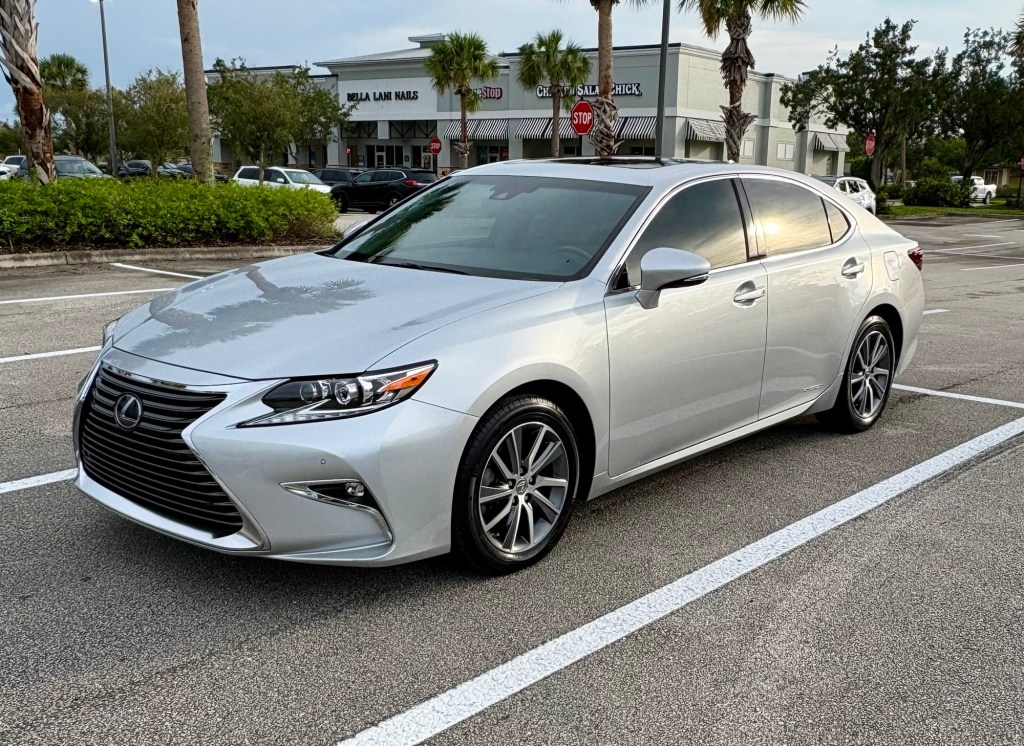
Readers of this blog will know I’ve been wanting a Lexus for some time, specifically a 2013–2018 Lexus ES 300h.
That generation of the ES has a strong reputation for reliability and long-term ownership value. Across Lexus forums and review sites, it’s often considered one of the best used luxury sedans you can buy—largely because it tends to age well and avoid costly issues common in other luxury brands.
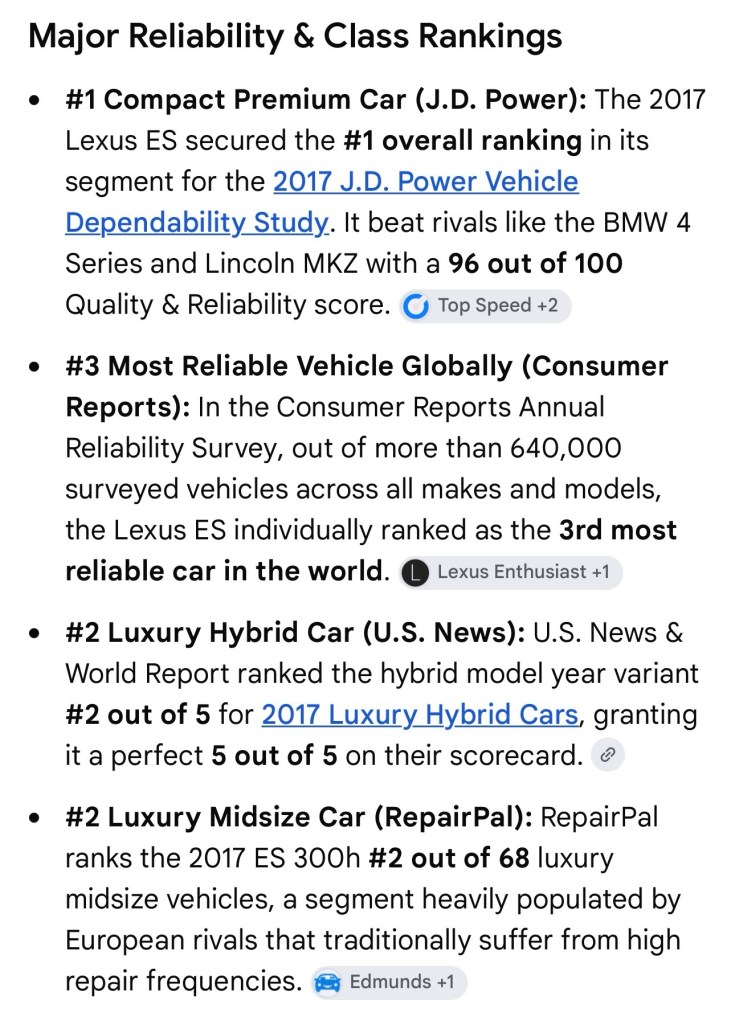
So I had been watching the market for a while.
While on vacation, I noticed my local Lexus dealer had several ES 300h’s in stock, so I went to take a look.
Most were typical for their age: decent cars, but with the expected wear—scratches, worn interiors, and tired trim. Nothing stood out.
Then I found a rare exception.
One 2017 ES 300h immediately stood out. The condition was exceptional—clearly garage kept and far better preserved than most 8–9 year old cars. The interior was unusually clean, the exterior equally impressive. It didn’t feel like a typical used luxury sedan.
Added bonus, it had just 49,975 miles.
I took it for a test drive, loved it, and bought it.
Why This Car
The 2017 model year was exactly what I wanted. The sixth-generation ES received a 2016 refresh with added safety features, improved sound insulation, and minor design updates. That made the 2017 a sweet spot: updated features, proven platform, and strong reliability.
But the real deciding factor was condition.
Used car pricing is driven by data points—year, mileage, trim, history, and equipment. On paper, I think the deal was fair, maybe even slightly on the high side.
But paper doesn’t capture outliers.
In my view, this car was in the top ~5% for interior condition and top ~10% for exterior condition among similar listings. That level of preservation meaningfully changes value.
I believe I effectively paid about $1,500–$2,000 less than what this specific example would reasonably command to the right buyer.
I wasn’t looking for the cheapest ES 300h. I was looking for the best one I could find for the money—and this was it.
The Trade-In
I traded in my 2022 Camry XLE Hybrid.
The dealer initially lowballed the offer, so I gathered outside quotes from Edmunds and Carvana. Both came in roughly $1,500–$2,000 higher.
I used those offers to negotiate, and the dealer increased their number by $600, bringing the trade value to $23,600.
While I could have sold privately or to Carvana, Florida’s trade-in tax benefit mattered. I only paid sales tax on the difference between the purchase price and trade value, which significantly narrowed the gap between offers.
So while $23,600 wasn’t the highest nominal offer, the effective value was much closer once taxes were considered.
What I Paid
The Lexus was priced at $25,242.
After a $849 dealer fee, registration, and other charges, the total out-the-door cost was just over 26k. The original window sticker showed a new price of just under $49,000.
That’s the real story here: a nearly $49K luxury hybrid, purchased for $25,242 before trade. After trading in the Camry, my actual out-of-pocket cost was just $3,155.27.
In effect, I exchanged a relatively new mainstream hybrid for a low-mileage Lexus that had already absorbed most of its depreciation.
That, to me, is the difference between buying a luxury car and buying one intelligently. I wasn’t trying to look wealthy. I was trying to get exceptional value, and a huge step up in class for minimal out of pocket cost. Without giving up much cosmetically.
Key Takeaways
1. Depreciation creates opportunity.
Luxury cars lose value quickly, and patience allows you to buy at the steepest discount.
2. Condition matters as much as mileage.
A well-kept example can be worth significantly more than a typical one with identical specs.
3. The best car isn’t always the cheapest.
Value comes from condition, history, and overall quality—not just price.
4. Always verify trade-in value.
Outside offers create leverage and improve negotiation outcomes.
5. Taxes can materially change the math.
Trade-in tax savings can narrow or eliminate gaps between competing offers.
In the end, this purchase wasn’t just about getting a Lexus. It was a reminder that understanding depreciation, recognizing quality, and negotiating effectively can completely change the economics of buying a luxury car.


Leave a Reply