A Masterclass From Warren Buffett

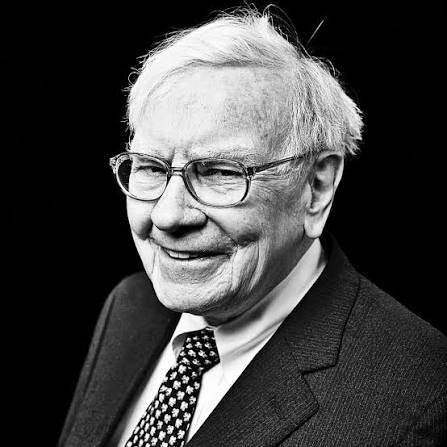
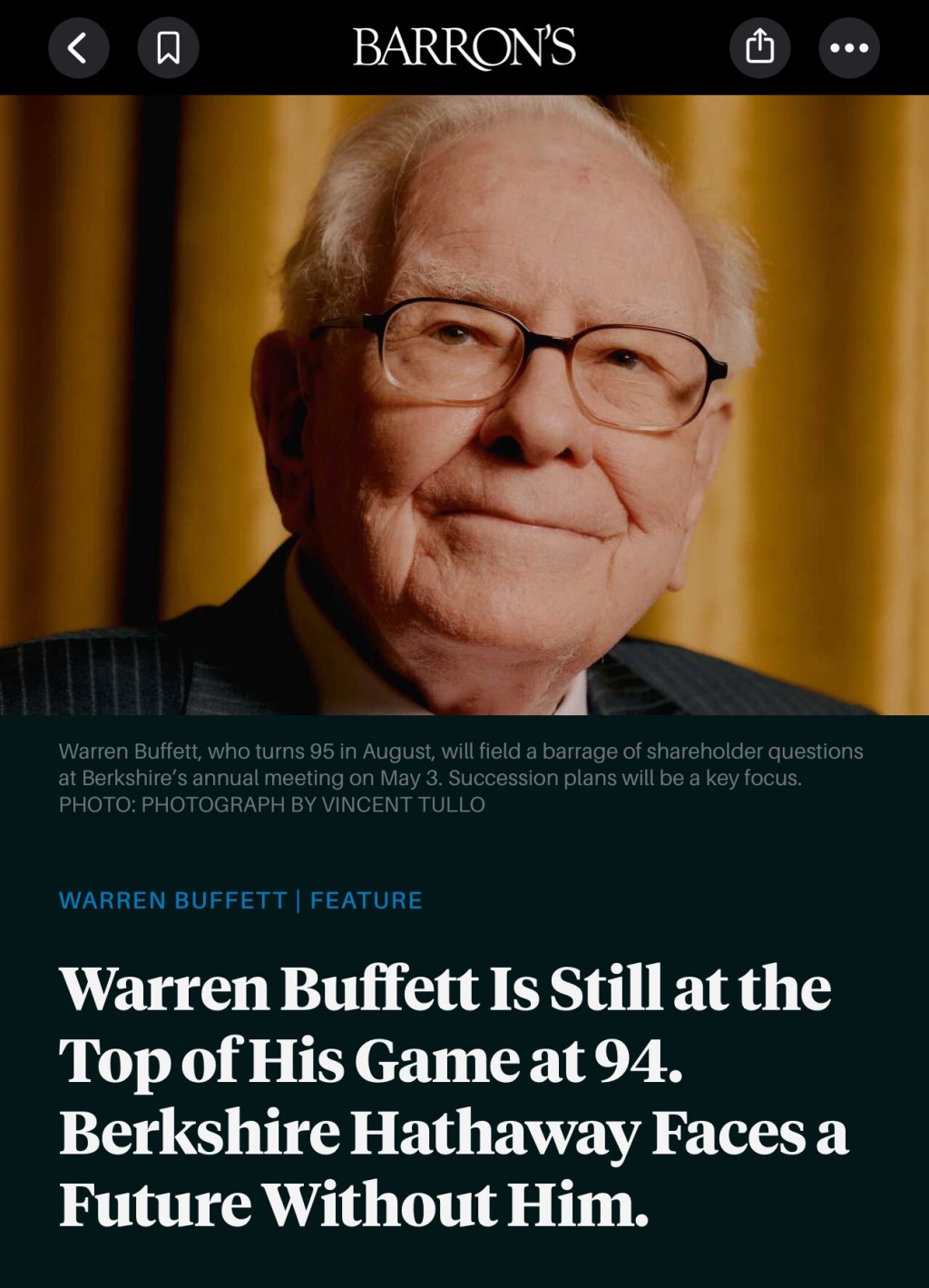
Warren Buffett is 94 years old. And while he is considered a legend in the investment world for his incredible record over decades, from time to time throughout his career, he has been ridiculed for having lost his way.

In fact, just recently he was criticized for holding too much cash and not making any significant investments or stock repurchases with the massive $338 billion of cash on the balance sheet. This was at the same time stocks powered higher for two back to back years of 20%+ gains.

What I see from Buffett today is reminiscent of the famous 1999 speech he gave in Sun Valley in front of the who’s who of business elites that their stocks were over valued and investors should tread carefully. He was openly mocked then just like now. Many said he just didn’t understand technology stocks and he was simply out of touch with the new tech economy.

And of course we all know what happened in the stock market over the next 2-3 years, stocks tanked big time.

On top of not doing much of anything over last couple years while the stock market powered higher, Buffett didn’t even repurchase shares of Berkshire, which is a preferred way to return capital to shareholders. (When you repurchase your own shares, the earnings of the company are spread amongst fewer shares thereby increasing the earnings per share at a higher rate than the actual earnings of the company.)

However, in doing nothing, he showed the world once again why he is the greatest capitalist of all time. And it is really a lesson to us all. Sometimes, doing nothing IS the best move. It’s also the hardest move. When everyone is making huge gains and the money spigot is flowing streams of green, it is incredibly hard to be rational.

Not only did Berkshire not make any significant investments or repurchase their own stock but they sold off big pieces of some companies that they owned, nearly at the peak and slowly built up their cash position. For example, Berkshire sold 2/3 of its massive Apple position amongst other companies in the portfolio for a total of $166 billion dollars.

Recognizing that things looked very expensive Buffett decided that holding cash was THE ultimate flex. Now with these uncertain tariff wars, recession fears and consumer confidence indexes tanking, Berkshire is ready to pounce.

Berkshire has more cash than Apple, Coca Cola, Bank of America and American Express combined.

Clearly Wall Street loves the moves Buffett has made. Currently the year to date performance of the S&P 500 is -3.56% while Berkshire is 16.89%.

All great things must end however. It’s one of the few certainties in life. With that being said, Buffett has decided to step down from the CEO role Jan 1st 2026 after a 60 year career as CEO. He has put the company in an envious position. What Warren Buffett did in business will likely never be replicated again. It was the perfect combination of brilliance/focus, market conditions and timing. $100 dollars invested in Berkshire Hathaway in 1965 would be worth roughly $5.5 million today.

When I first learned he was stepping down I just had to smile. What a fantastic end to a legendary career. Going out on top.

The Book That Changed My Life

This has been a very busy year so far. I took a week cruise, had a pretty lengthy rental vacancy, bought a car and did some home projects at my primary house. Now that things are finally settling down, I’ve begun to take stock of where I am in life and the pivotal moments that altered my course in getting here. In this reflective mood, I was searching for the biggest contributor to the path I am currently on. A path I hope leads to fulfillment and early retirement. Surely I wasn’t on this path in high school or my college years. So what changed?

I’ll tell you what changed..I read a really big book. I’ll never forget when I came across the book that changed my life forever. It was right around the time when Borders the book store was going out of business and they had their inventory in the parking lot under huge tents. But first a little back story to set the table.

Admittedly, I mainly went to the book store to look at the music selection they offered or to get coffee, never much of a reader as a kid. Although I liked the idea of reading, I could never find anything to keep my interest for more than a few pages. I often had to re read the same paragraph over and over to comprehend information. Comprehension in school was always a weak subject for me. I struggled. It all seemed so boring. Comprehending what I was reading took real work. Brain work. I used to think I had a reading disability to be honest. I can recall finishing only one book as a kid, although the name of it slips my memory. Still, the idea to step into a different world, or to see the world through someone else’s paradigm was intriguing. An Introvert at heart, I pined for the ability to read, learn and discover new things. But what would interest me enough to focus my mind? This always eluded me growing up.

So I moved back to the town I grew up in June of 2007 shortly after graduating college in May of that year. I was lost to say the least. At that time I remember being so confused on who I was. What was I passionate about? What was I good at, if anything at all? I always admired those friends I grew up with who knew exactly what they were passionate about and wanted to do with their lives. I just had no idea. It was worrisome and gave me great anxiety at this time of my life to be honest. I was an average student at best, who never really applied myself and was hardly interested at all in basically any subject matter that was taught in school. This also worried me. I was craving something to be passionate about. Oddly, although I had no real passions, I always knew if I found something I cared about I would be relentless and good at it. I can get obsessed with something if I care enough.

After a few months living back home I got a job as a Nuclear Security Officer. What was intended as a transition job turned out to be a pretty good job with excellent pay and benefits. And although I had no real passions at the time, I did love the idea of being financially independent.

I can’t put my finger on exactly when the interest was piqued. I will say that my hire date was October 1st 2007, the peak of the housing financial crisis. And the town I live in was hit exceptionally hard with home prices dropping far more than national averages. Taken together, with a job that was paying me real money at a young age, I smelled a huge opportunity. Rock bottom interest rates, home prices off 60%, stocks dirt cheap, huge pay gains, no debt, living at home, no kids and somewhat ambitious. Collectively these were a set of variables that if harnessed correctly could set me up for life. I knew very little at the time, but I did see this incredible opportunity and viewed it as a once in a generation type event. This opportunity ignited a strong interest. Still, at this point I wouldn’t quite call it a passion. Nonetheless, I began devouring anything I could get my hands on that had to do with getting rich. I read everything. Although I truly believe every book I read was an important developmental piece of my story, not one book changed me like the one I was soon to find.

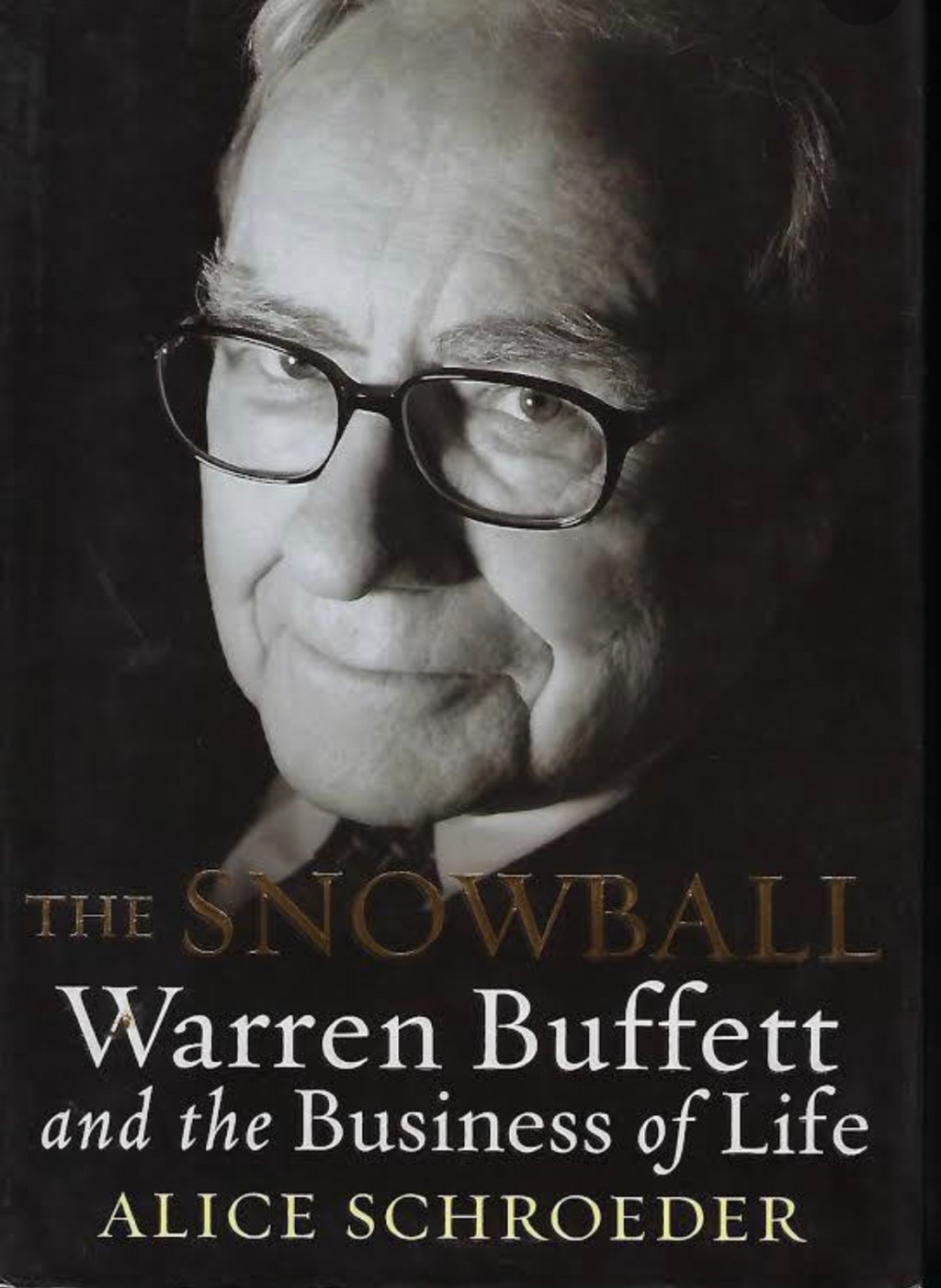
Sometime around 2010 during the bankruptcy process for Borders I found The Book. In the parking lot of the mall was all of Borders’ inventory under these huge tents. Rows and rows of books. I came across one book of this old wise looking guy. The look on his face was one that said, I know more than you. The book was The Snowball Warren Buffett and the Business of Life. Embarrassingly, I had never heard of Warren Buffett. And why this book intrigued me to this day I have no idea. It was a massive book with 787 pages of fine print and minimal pictures. The idea of ever reading it seemed daunting. But I had been reading about investing for a few years and the book was cheap so I figured what the hell. I remember reading the summary on the inside and phrases like the “Oracle of Omaha” and the “Sage of Nebraska” jumped out at me. As if he were some type of living legend. And for some reason the description of him as just a plain and simple ordinary billionaire is what sold me. I had to know who this guy was.

And so it began. I devoured that book. And it sparked a passion for business and investing that still fascinates me today.

Buffett’s story is relatable in many ways. You read about other billionaires and most if not all started a hugely successful company. In other words they created something. And while inspiring and interesting to read, it does often leave one feeling inferior. However, Buffett didn’t create anything. He is the ultimate capitalist. I don’t have the time to write out his biography in this post, but I encourage you to read his story or watch some of the biographies that have been done on him.

To summarize, he graduated from high school with roughly ten thousand bucks, invested in companies ran by others and ultimately became the richest person in the world. He takes the long view, understands value and is a brilliant investor. Some of his investments have been in plain sight, yet somehow he saw value where others missed it. Many of his investments he has owned for decades. In other words, he shuns the short term mentality that grips Wall Street. Oh, and he still lives in the same upper middle class house he bought in 1956 for $31,500. Intrigued?

You may be asking, ok but why did this book change my life? When I was younger, I can’t say I had passions, but I was incredibly curious. I would ask random questions like “I wonder how much money this store makes?” Needless to say, although I was curious about many things, I had a particular curiosity about business. I always fantasized about being a business owner and how pleasurable it must be to be in control and work with the numbers, alone at night in your office. The idea of working with “my numbers” intrigued me. Something I can have control of, optimize and compete in. I don’t think I thought of it as a passion at the time. But this book unlocked that passion.

Buffett’s approach is to buy pieces of companies in the stock market. And to approach those pieces as if you were buying the whole company. Berkshire Hathaway, which Buffett is a controlling shareholder, also owns wholly owned companies. And in these wholly owned companies he leaves the management in place. Essentially he writes a check to buy either a piece or the whole company, and says I want to buy the management too, just send me whatever excess capital you don’t need in your business. This is very different than the typical corporate raiders, or day trading masses that populate Wall Street. Buffett’s approach therefore is not of a speculative nature but that of an owner. What this taught me is I don’t have to have big bucks and or creativity to start a company of my own, I can save money and buy little pieces of companies via the Stock Market. And my approach can be the same. I can check in every quarter and see how my company is doing by reading the quarterly reports. In essence I would get to live out that childhood fantasy. Suddenly a whole new world opened up. But I had no idea early on how to read accounting statements or what makes a good business. Why did some companies fail? Or What made an exceptional company? But the passion was born. And to this day this mindset shift has paid dividends, pun intended.

Want To Be Financially Well Off? Be Boring

Investing is such a fascinating game. There are so many different schools of thought, different approaches and experts to try to gleam advice from. There is a plethora of gurus everywhere you turn. And they all have one thing in ok common. Everyone tells you that you will make your fortune through ACTIVITY. These activities can range from day trading stocks, flipping real estate, buying and selling options, timing stock markets and many other strategies. They all say you need to be in the game and doing something. These strategies are what I would classify as high risk, high reward. But as I get older, I’m convinced you will make your fortune from INACTIVITY. After all, as I mentioned in a previous post there are two basic rules to investing 1. Never lose money 2. Never forget rule number 1.

Full disclosure, I have not followed this line of reasoning for most of my investing career. But you know what? Sometimes the best lessons are those learned from mistakes. You go through life, try different things, stay diligent and if you learn from your mistakes, you get more polished as time goes on. You become weathered, refined and more efficient. But the key is you have to learn and adapt.

That brings me to the point of this post. My advice to those reading is to be boring. Your investing style maybe shouldn’t be something to brag about at a party? Just my two cents. Boring is probably the ideal approach long term for most people. Be the tortoise. I have read this so many times over the past 15 years, and at 37 I finally understand why this is solid advice.

Over the last three months, I have simplified and streamlined my investments. I have moved out of any stock or fund that requires any kind of thought or decision making. Basically I have adjusted my portfolio to be bullet proof. A no brainer portfolio if you will. And I have to say, it’s been one of the best decisions I could have made. I have become the financial equivalent of a basic bitch.

Being boring is, well boring. I find myself nowadays barely checking my various stock accounts. I go weeks sometimes without checking stock prices, the S&P 500 or even real estate prices. I mean what difference does it make really? With my stocks I am 80% indexed in plain Jane total stock market index funds and S&P 500 index funds. I would simplify even more if I could but some accounts only offer certain funds. With the real estate I own, I hardly check the market value of them. Why would I? I do an analysis once a year and type up a profit and loss statement with a few figures such as return on equity and cash on cash return. And as long as these figures are acceptable, I file it and then go about my life.

This level of boring breeds efficiency. it also strips emotion out of the equation. I know that stocks retain earnings and will reinvest those earnings and increase profits over time. So, I own a Total Stock Market Index fund to remove any decision making and spread out my risk. I don’t need to think, to stress or be influenced by market moves. Which could easily coerce me into making costly mistakes. I don’t need to worry if the mutual fund I picked that has a certain strategy was a smart move or if the stock I picked will turn out ok. I just own every stock. And I just keep buying. Consistently. Whether the markets are up or down, to eliminate the element of trying to time the market. You see, boring is a superpower in many ways. And it all but guarantees you follow the two rules of investing mentioned above.

The epitome of boring is Warren Buffett. 99% of his wealth is in Berkshire Hathaway Stock, to the tune of 380k class A shares. Berkshire is not very well known or understood. But I would argue it is a boring company/investment. Buffet’s main job is allocating the capital that Berkshire retains into more businesses and or marketable securities, with the goal of earning more as the years go by. But, he famously missed the dot.com bubble by avoiding any and all internet stocks. In fact, he was laughed at and mocked in the late 90’s as having lost his touch and for being way to old fashioned for such a new tech centric economy. He famously gave a speech in 1999 in Sun Valley Idaho in front of a who’s who of business and tech icons deriding the tech stocks as being wildly over priced. You see, Buffett has always invested in very boring and very predictable companies. To him stability is gold. And that has been his genius. He sticks with what he knows. A famous quote from Buffett at his shareholder meeting in may of 2001:

“We have embraced the 21st century by entering such cutting edge industries as brick, carpet, insulation and paint. Try to control your excitement.”

Suffice it to say, Buffett is boring. Over the last two and a half years, fanciful IPO’s and SPAC’s have brought a level of excitement and capital to Wall Street not seen in decades. Buffett on the other hand chose to hold, cash. To the tune of 145 billion. While everyone else was focused on activity, Buffett focused on inactivity. He did nothing. How did this work out for him?

Remember, investing is kind of like baseball with no called strikes. You don’t have to swing. You can sit at the plate forever and do nothing. And when you do swing, you don’t need to swing for the fences every time. Singles and doubles will produce a satisfactory batting average over the course of your investable career. Think batting average( compounding rate) not home run count.

What A Stock Price Doesn’t Tell You

Just because one company’s stock price is cheaper than another’s does not mean that the company is smaller or worth less. Personally I pay very little attention to the share price. I mean what does it really tell me when you think about it? Doesn’t tell me a damn thing about what the business is worth.

Let’s look at two real companies. WD- 40 Company. That little spray bottle of lubricant everyone has in their garage. The share price is 204.55 currently. Berkshire Hathaway’s B shares are 271.96. Berkshire is a conglomerate that owns many different companies. A holding company if you will. Now, what can you really infer from looking at these share prices? Not much. Sadly, people do it all the time. They know not what they say. Here are a few examples you hear during amateur hour..

“The shares are only 20 dollars they are dirt cheap!”

“The shares are 1000 dollars it’s way to expensive!”

“Im going to wait until after the stock splits and then buy it so it will be cheaper.”

These statements make no sense to the investor. They are the words of someone who doesn’t understand what they are doing. If you follow this line of reasoning you will surely get a poor result relative to the market over time. Moral of the story..understand what you own.

Unfortunately for some insane reason when a company gets broken up into tiny pieces and you have the ability to buy those little pieces every day, people lose sight of what they own and go bat shit crazy. Disco balls come down, cool lights start flashing and the booze starts flowing. Everyone is having a famously good time, then the morning after happens and everyone just wants to forget the bad decisions they made. Ahh the good old college days.

But we are investors right? We know what we own. We will have zero regrets! We look at each share as if it were the whole business. Warren Buffett famously said “investment is most intelligent when it’s most business like.”

A true investor would want to know the number of shares outstanding and the net earnings. Only then can we can start to paint the picture of what we are looking at.

  • WD-40 Company
  • 204.55 Share Price
  • 13.6m Shares
  • 2.79b Valuation
  • 85.8m Pre-Tax Earnings
  • Berkshire Hathaway
  • 271.96 Class B Share Price
  • 1.47m Shares (A & B)
  • 597b Valuation
  • 102b Pre-Tax Earnings

Now you have a much better preliminary picture of what you are analyzing. See the significance? (Berkshire has a unique capital structure with A & B shares. The A shares are roughly 400,000 a piece. For this reason they don’t have many shares outstanding.)

Knowing these numbers helps you to paint the picture of what you own. Comparing the share price alone we can reason they are similarly sized enterprises. However, Berkshire is over 200 times the size of The WD-40 Company. And while the share price implies that WD-40 is cheaper, Berkshire is much cheaper relative to the earnings of the company. You are getting much more bang for your buck with the more expensive stock. In fact WD-40’s price is 41 times earnings, while Berkshire’s is only 7.43 times. Clearly Berkshire is cheaper when you think about it like an investor. Price is what you pay, value is what you get.

An investor is concerned how the underlying business performs over time. Ask yourself, if I purchased the shares at the current price, what am I actually paying for the entire company? The whole point of investing your capital now is to ensure you get more back as you go along. How much will the company produce on a net basis relative to what I paid? Is that a satisfactory return? What’s my competition and is the company solvent? Most importantly, will the company deliver enough cash soon enough to make it a sensible investment relative to prevailing interest rates.

For example, If you could take much less risk on a 10 year government bond and get a higher return, why take on the risk of owning stock in a company where the return isn’t so certain?

Make sure it’s a satisfactory return relative to the purchase price of the entire enterprise. And understand the limitations of the per share price and what it tells you about valuation. Your future self will thank you.