A Masterclass From Warren Buffett

Warren Buffett is 94 years old. And while he is considered a legend in the investment world for his incredible record over decades, from time to time throughout his career, he has been ridiculed for having lost his way.

In fact, just recently he was criticized for holding too much cash and not making any significant investments or stock repurchases with the massive $338 billion of cash on the balance sheet. This was at the same time stocks powered higher for two back to back years of 20%+ gains.

What I see from Buffett today is reminiscent of the famous 1999 speech he gave in Sun Valley in front of the who’s who of business elites that their stocks were over valued and investors should tread carefully. He was openly mocked then just like now. Many said he just didn’t understand technology stocks and he was simply out of touch with the new tech economy.

And of course we all know what happened in the stock market over the next 2-3 years, stocks tanked big time.

On top of not doing much of anything over last couple years while the stock market powered higher, Buffett didn’t even repurchase shares of Berkshire, which is a preferred way to return capital to shareholders. (When you repurchase your own shares, the earnings of the company are spread amongst fewer shares thereby increasing the earnings per share at a higher rate than the actual earnings of the company.)

However, in doing nothing, he showed the world once again why he is the greatest capitalist of all time. And it is really a lesson to us all. Sometimes, doing nothing IS the best move. It’s also the hardest move. When everyone is making huge gains and the money spigot is flowing streams of green, it is incredibly hard to be rational.

Not only did Berkshire not make any significant investments or repurchase their own stock but they sold off big pieces of some companies that they owned, nearly at the peak and slowly built up their cash position. For example, Berkshire sold 2/3 of its massive Apple position amongst other companies in the portfolio for a total of $166 billion dollars.

Recognizing that things looked very expensive Buffett decided that holding cash was THE ultimate flex. Now with these uncertain tariff wars, recession fears and consumer confidence indexes tanking, Berkshire is ready to pounce.

Berkshire has more cash than Apple, Coca Cola, Bank of America and American Express combined.

Clearly Wall Street loves the moves Buffett has made. Currently the year to date performance of the S&P 500 is -3.56% while Berkshire is 16.89%.

All great things must end however. It’s one of the few certainties in life. With that being said, Buffett has decided to step down from the CEO role Jan 1st 2026 after a 60 year career as CEO. He has put the company in an envious position. What Warren Buffett did in business will likely never be replicated again. It was the perfect combination of brilliance/focus, market conditions and timing. $100 dollars invested in Berkshire Hathaway in 1965 would be worth roughly $5.5 million today.

When I first learned he was stepping down I just had to smile. What a fantastic end to a legendary career. Going out on top.

Be Greedy When Others Are Fearful

Wall Street is a crazy place. The minute you think you have it figured, it will inevitably prove you a fool. The famous phrase of bulls, bears and bum steers is parlance for the emotional roller coaster that exists on the street.

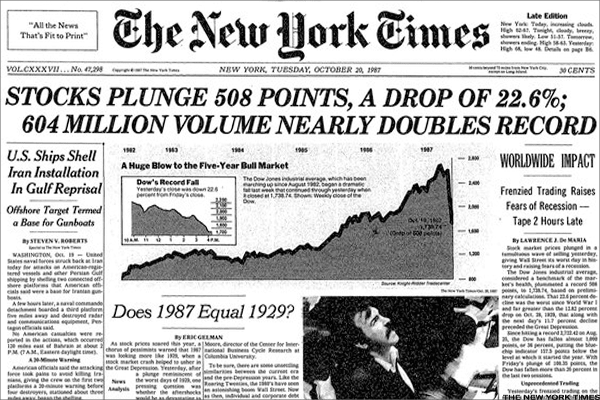
The post image above is a famous stock market crash called Black Monday and it happened October 19, 1987. In fact, it was one of the single worst days on Wall Street. Of course, if you’ve been around long enough you likely will recall many bad periods in the stock market. With all this doom, what is one to do? Say the hell with the market and park your savings in cash? First, let’s take a look at how stocks did in the year 1987 and thereafter. S&P Returns (with dividend reinvestment):

  • 1987 5.1%
  • 1988 16.1%
  • 1989 31.7%

Now to more current events..

December 31st, 2022

What do you suppose the mood was like year end 2022 across the country and in particular on Wall Street? Inflation was high, coming in at 9.1% in June of 2022 on an annualized basis. This caused the Federal Reserve to begin one of the fastest rate tightening cycles in its history. They raised the federal funds rate by more than 500 basis points (5%) between March 2022 and July 2022. For consumers and governments with large debt balances, this was a shock. All of a sudden, in addition to the rapid rise in housing, food and consumer items, servicing debt just got suddenly much more expensive. To say the mood was sour is an understatement to say the least. All of this collectively sent stocks into a tailspin.

Like it or not. Fear and emotions get the best of us when it comes to money. Even the best investors of our time can fall victim to it. Realizing these flaws, how do we counter it? We just keep buying and keeping the right perspective. That’s the answer. Let’s say you bought a farm for 500k. Your intention was to hold it for a long time. What would be your biggest concern? How much it earns each year relative to what you paid is the most logical answer. If prevailing interest rates were 3-5% as they currently are and your investment was producing 50-75k of earnings each year, that’s a perfectly solid investment. You’d need not pay attention to overly optimistic or pessimistic buyers and what they’d offer you for your farm. Hopefully over time with efficiency gains and crop price increases you can grow the earnings and improve the return on equity. The year to year valuations, no matter how positive or negative, need not concern you.

With the sermon out of the way, what did I do differently following the horrible stock market of 2022? Absolutely nothing. Sure I noticed my account balance took a slashing. But I understood why it happened. I know from reading that corporate profits were still excellent. Returns on equity across Wall Street were excellent as well. So I just kept buying. Here is my total stock market purchases for 2022 and beyond:

  • 2022 $36,043
  • 2023 $31,000
  • 2024 $50,000

2022 and 2023 were a bit slower from an investing standpoint due to three roof purchases and a new car, not out of fear. Surely if I had more capital I’d have invested more. So how did this stay the course approach workout you may be wondering?

December 31st, 2024

In case you missed it, these are two front page articles of the Wall Street journal, both the last day of the year, two years apart. My how fast things can change. Admittedly, this was a rather fast turn around in the world of stocks. In fact, we have seen many periods just like this since the 2008 Great Recession. Huge price corrections followed shortly thereafter by record highs. In fact, this has become such a thing, it has its own phrase: BTD (buy the dip).

It’s probably important to note that this isn’t always the case with the stock market. We’ve become immured by a market that seems to do nothing but go up for the better part of 15-16 years. I get the feeling an unshakable confidence is stewing. You see offsets from this confidence boiling over into meme stocks and crypto currencies. After all, it’s been a long bull market with only brief corrections in between. But remember, Wall Street is a humbling place.

Let’s recall two 17 year periods from 1964-1981 and then 1981-1998. These two periods are such a fascinating case study of Wall Street. The mood towards stocks after WW2 and the Great Depression was not good. It didn’t help that profit margins across corporate America were depressed by the early 80’s thanks to the sledgehammer on the economy from the Fed Chairman Paul Volcker raising interest rates rapidly to cool inflation. This interest rate tightening cycle also acted like a noose to stocks. Yet the economy as a whole was absolutely booming. In fact, GDP during this first 17 year period rose 373%. Still, stocks were unfashionable. As a result, bargains were everywhere. Warren Buffett was famously quoted as saying that living in this era was like being “a sex crazed teenager living in a harem.” But people just did not want to own stocks.

In the period 1981-1998, interest rates dropped from a high of 13.65% to 5.09%. And GDP increased a respectable 177%. Yet business sentiment improved significantly even though the economy wasn’t any materially better than the previous 17 year period. Below is the stock market performance for the two periods.

December 31, 1964: 874.12

December 31, 1981: 875

December 31, 1981: 875

December 31, 1998: 9181.43

Bull markets, bear markets. Doesn’t matter. Keep your wits about you, keep disciplined and keep investing. Betting against America has never worked. Even long periods of awfulness eventually produce satisfactory results to the long term, consistent and patient investor.

The Book That Changed My Life

This has been a very busy year so far. I took a week cruise, had a pretty lengthy rental vacancy, bought a car and did some home projects at my primary house. Now that things are finally settling down, I’ve begun to take stock of where I am in life and the pivotal moments that altered my course in getting here. In this reflective mood, I was searching for the biggest contributor to the path I am currently on. A path I hope leads to fulfillment and early retirement. Surely I wasn’t on this path in high school or my college years. So what changed?

I’ll tell you what changed..I read a really big book. I’ll never forget when I came across the book that changed my life forever. It was right around the time when Borders the book store was going out of business and they had their inventory in the parking lot under huge tents. But first a little back story to set the table.

Admittedly, I mainly went to the book store to look at the music selection they offered or to get coffee, never much of a reader as a kid. Although I liked the idea of reading, I could never find anything to keep my interest for more than a few pages. I often had to re read the same paragraph over and over to comprehend information. Comprehension in school was always a weak subject for me. I struggled. It all seemed so boring. Comprehending what I was reading took real work. Brain work. I used to think I had a reading disability to be honest. I can recall finishing only one book as a kid, although the name of it slips my memory. Still, the idea to step into a different world, or to see the world through someone else’s paradigm was intriguing. An Introvert at heart, I pined for the ability to read, learn and discover new things. But what would interest me enough to focus my mind? This always eluded me growing up.

So I moved back to the town I grew up in June of 2007 shortly after graduating college in May of that year. I was lost to say the least. At that time I remember being so confused on who I was. What was I passionate about? What was I good at, if anything at all? I always admired those friends I grew up with who knew exactly what they were passionate about and wanted to do with their lives. I just had no idea. It was worrisome and gave me great anxiety at this time of my life to be honest. I was an average student at best, who never really applied myself and was hardly interested at all in basically any subject matter that was taught in school. This also worried me. I was craving something to be passionate about. Oddly, although I had no real passions, I always knew if I found something I cared about I would be relentless and good at it. I can get obsessed with something if I care enough.

After a few months living back home I got a job as a Nuclear Security Officer. What was intended as a transition job turned out to be a pretty good job with excellent pay and benefits. And although I had no real passions at the time, I did love the idea of being financially independent.

I can’t put my finger on exactly when the interest was piqued. I will say that my hire date was October 1st 2007, the peak of the housing financial crisis. And the town I live in was hit exceptionally hard with home prices dropping far more than national averages. Taken together, with a job that was paying me real money at a young age, I smelled a huge opportunity. Rock bottom interest rates, home prices off 60%, stocks dirt cheap, huge pay gains, no debt, living at home, no kids and somewhat ambitious. Collectively these were a set of variables that if harnessed correctly could set me up for life. I knew very little at the time, but I did see this incredible opportunity and viewed it as a once in a generation type event. This opportunity ignited a strong interest. Still, at this point I wouldn’t quite call it a passion. Nonetheless, I began devouring anything I could get my hands on that had to do with getting rich. I read everything. Although I truly believe every book I read was an important developmental piece of my story, not one book changed me like the one I was soon to find.

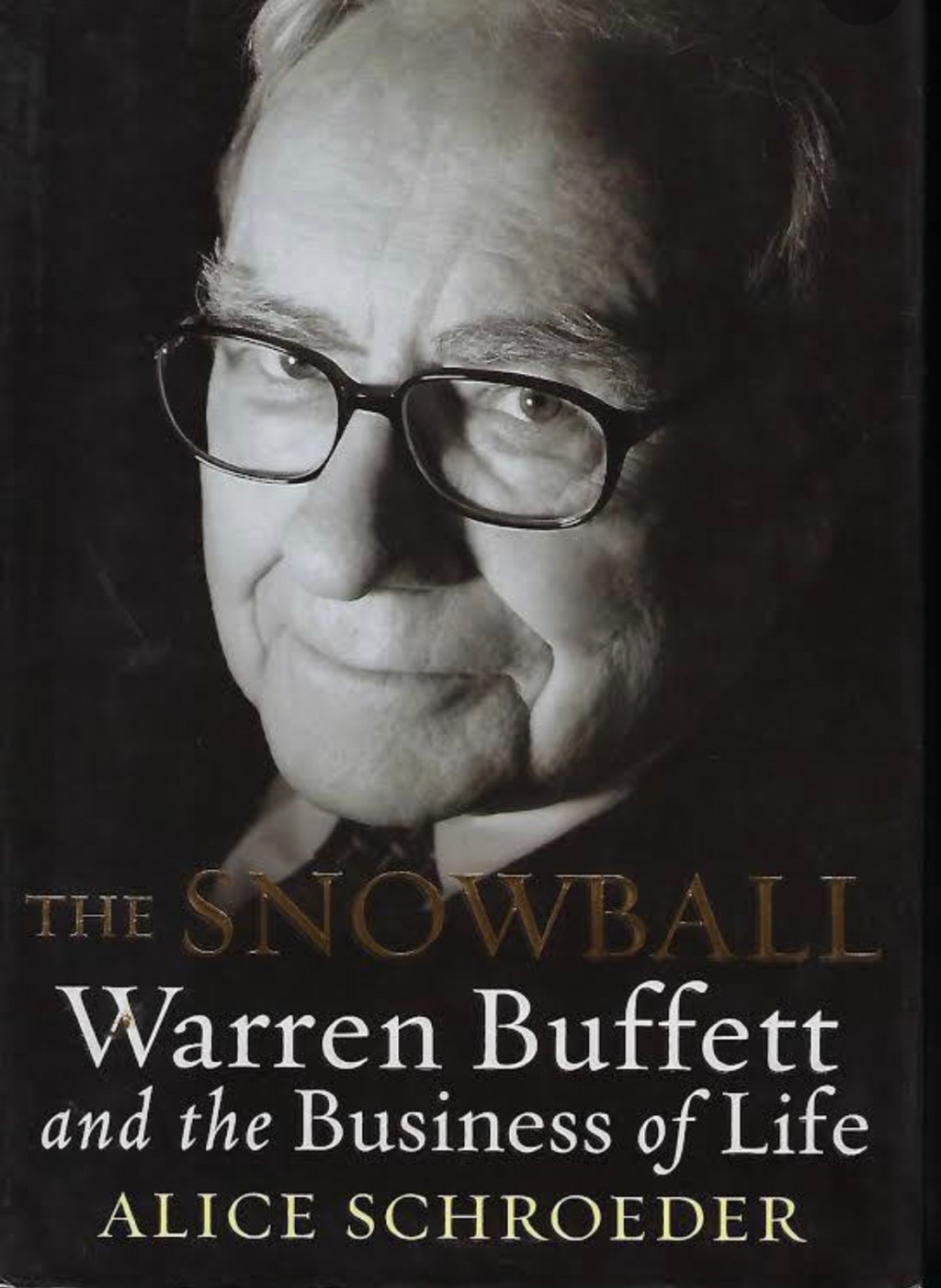
Sometime around 2010 during the bankruptcy process for Borders I found The Book. In the parking lot of the mall was all of Borders’ inventory under these huge tents. Rows and rows of books. I came across one book of this old wise looking guy. The look on his face was one that said, I know more than you. The book was The Snowball Warren Buffett and the Business of Life. Embarrassingly, I had never heard of Warren Buffett. And why this book intrigued me to this day I have no idea. It was a massive book with 787 pages of fine print and minimal pictures. The idea of ever reading it seemed daunting. But I had been reading about investing for a few years and the book was cheap so I figured what the hell. I remember reading the summary on the inside and phrases like the “Oracle of Omaha” and the “Sage of Nebraska” jumped out at me. As if he were some type of living legend. And for some reason the description of him as just a plain and simple ordinary billionaire is what sold me. I had to know who this guy was.

And so it began. I devoured that book. And it sparked a passion for business and investing that still fascinates me today.

Buffett’s story is relatable in many ways. You read about other billionaires and most if not all started a hugely successful company. In other words they created something. And while inspiring and interesting to read, it does often leave one feeling inferior. However, Buffett didn’t create anything. He is the ultimate capitalist. I don’t have the time to write out his biography in this post, but I encourage you to read his story or watch some of the biographies that have been done on him.

To summarize, he graduated from high school with roughly ten thousand bucks, invested in companies ran by others and ultimately became the richest person in the world. He takes the long view, understands value and is a brilliant investor. Some of his investments have been in plain sight, yet somehow he saw value where others missed it. Many of his investments he has owned for decades. In other words, he shuns the short term mentality that grips Wall Street. Oh, and he still lives in the same upper middle class house he bought in 1956 for $31,500. Intrigued?

You may be asking, ok but why did this book change my life? When I was younger, I can’t say I had passions, but I was incredibly curious. I would ask random questions like “I wonder how much money this store makes?” Needless to say, although I was curious about many things, I had a particular curiosity about business. I always fantasized about being a business owner and how pleasurable it must be to be in control and work with the numbers, alone at night in your office. The idea of working with “my numbers” intrigued me. Something I can have control of, optimize and compete in. I don’t think I thought of it as a passion at the time. But this book unlocked that passion.

Buffett’s approach is to buy pieces of companies in the stock market. And to approach those pieces as if you were buying the whole company. Berkshire Hathaway, which Buffett is a controlling shareholder, also owns wholly owned companies. And in these wholly owned companies he leaves the management in place. Essentially he writes a check to buy either a piece or the whole company, and says I want to buy the management too, just send me whatever excess capital you don’t need in your business. This is very different than the typical corporate raiders, or day trading masses that populate Wall Street. Buffett’s approach therefore is not of a speculative nature but that of an owner. What this taught me is I don’t have to have big bucks and or creativity to start a company of my own, I can save money and buy little pieces of companies via the Stock Market. And my approach can be the same. I can check in every quarter and see how my company is doing by reading the quarterly reports. In essence I would get to live out that childhood fantasy. Suddenly a whole new world opened up. But I had no idea early on how to read accounting statements or what makes a good business. Why did some companies fail? Or What made an exceptional company? But the passion was born. And to this day this mindset shift has paid dividends, pun intended.

Are Stocks A Gamble?

It’s easy to see how investing in the stock market could be considered gambling with your money. It’s like going to Vegas right? You take a dollar amount that you’re comfortable losing and hope that you make the right bets to turn it into more. You might even think that Vegas is safer. At least in Vegas you can win or lose based on your own skill depending on the game you play. This idea that stocks are this crazy gamble and too risky keeps people on the sidelines. In reality the stock market has been one of the biggest wealth creators the world has ever seen. In order to capture that wealth generation you need perspective, understanding and the right approach. Once you have these, you can basically build huge amounts of wealth with basically little to no risk at all. Yes I said it.

First let’s be honest, there is certainly gambling going on with stocks. There always has been. It’s kinda like a community pool, everyone is welcome. Options, selling short and credit default swaps are but a few methods investors use to speculate in markets. These professionals try to make money on short term swings in the markets. These methods can be incredibly profitable if they work. But this is incredibly advanced, and probably should be avoided for anyone who isn’t a professional. Hell, even professionals should avoid these types of trades most of the time. I like to think about investing like baseball. Over my investing career, how do I achieve the highest batting average (compound interest rate)? I don’t need to hit home runs and swing for the fences to be effective. I need consistent singles and doubles. And more importantly, I need to never strike out. So, over the course of my career I have a nice solid average. They say there are two rules of investing. 1. Never lose money. 2. Never forget rule number 1.

Unfortunately, everyone has a story of some huge stock win they had, or your friend down the street who is making a fortune day trading yada yada. And this entices people to start swinging for the fences. Most likely, none of them will outperform the market over time. They may do it for a year or so, but over the course of their investing career they likely will not. Statistically, 78% of mutual funds underperform their benchmarks over a 20 year time frame. And those are professionals! Outperforming markets is a very hard. You can try to dance in and out, time the market, buy the dips and so on. But an honest appraisal of your performance in 30 years would likely show you did worse than the market. And that would be a crappy feeling.

But! If you just consistently buy every month you would have gotten very rich over time by simply owning a boring S&P 500 index fund, as this table below shows. A $5,000 dollar investment with no further investment would have grown to $2,208,355 with a 10.5% compound rate since 1965, which is what the S&P 500 delivered. But as the table below shows, you would have had to deal with some extreme volatility. Understanding what you own and having a long term view helps to calm the nerves.

S&P 500 Returns With Dividends Reinvested:

  • 1965 10.0
  • 1974 (26.4)
  • 1994 1.3
  • 1998 28.6
  • 2002 (22.1)
  • 2008 (37.0)
  • 2021 28.7
  • Compounded Average Annual Gain 1965-2021 10.5%

What Is A Stock, Anyway?

Before you can be comfortable with the stock market, you have to know what a stock is. A stock is not just an arbitrary number that bounces up and down on a chart based on a series of random events. In fact, when you own shares in a company, you own a claim claim check on the net assets of the company now and on the future earnings of the company. A great illustration of this is the NBC show “Shark Tank.” In the show, people who need capital pitch their businesses to a group of investors to raise capital. So if their company is valued at $1 million, they may ask the sharks for $200k of capital in exchange for 20% ownership of the business. Similarly, when a company needs capital to grow, they offer shares to the public in an IPO (Initial Public Offering). By selling partial ownership to shareholders, they avoid taking out a loan or selling bonds, which are required to be paid back with interest. Upon the IPO, a one time transfer of shares is exchanged to the public at a stock’s par value. On IPO day, the difference between the par value and what the shares start trading at is the amount of money that will be raised. It’s a one time transaction. Subsequent trading is then between investors.

It is important to note that each company has a different amount of shares outstanding. This is important because just because a share price is higher than another, this does not mean it’s more valuable. The Value of the company is determined by the share price multiplied by the number of shares outstanding. Example: Washing Trust Bancorp Inc. is a publicly traded company. At present it has 17.35m shares outstanding. Share price is 49.91 presently. (17,350,000 shares * 49.91 per share price= market value) So the whole company is worth 870m essentially. Hypothetically, if you owned 1.73 m shares, then you would own 10% of the company. 9.2m of the 92 million they earned last year would be yours. This is to help illustrate what you really own. You own a piece of a business when you own stocks. Whether you own a small piece via stock, or the whole company, your approach to investment should be the same.

Minimizing Your Risk

What are the Four main risks to investing in the stock market?

  • Buying At The Wrong Time
  • Short Term Thinking
  • Buying The Wrong Stock
  • No consistency

How do you basically eliminate all four risks? Dollar Cost Averaging (DCA) into a broad based market index consistently over a long period of time!

Buying At The Wrong Time: Dollar Cost Averaging is buying into the market consistently, whether share prices are up or down. The benefit of DCA is that it lessens the impact of market fluctuations overtime, all but eliminating the risk of timing the market wrong. Imagine you invest $500 into the market EVERY month. In January, the average share cost you buy is $100, so you’ve bought 5 shares. Then, in February, the average share cost jumps to $150. Now that $500 only bought 3.33 shares. However, in March the average share price is only $50. That means for that same $500 you’ve bought 10 shares. By consistently investing, you’re minimizing the impact of swings in the market. You are also forcing discipline. You are buying less when things are expensive and buying more when prices come down. This all but ensures a satisfactory result over time.

Short Term Thinking. The stock market is a long term game, you need to be willing to leave it in for at least 10 years. Here is an illustration to show just how long term you need to be when thinking about the stock market. The 17 long years between 1964 and 1981 stocks went nowhere. That’s a long time. Stocks were simply unfashionable. But over the course of the century they went up 17,000%. It’s important to keep a long term perspective.

  • Dow Jones Industrials
  • Dec 1964: 864
  • Dec 1981: 865
  • Dec 1900: 66
  • Dec 1999: 11,467

Buying The Wrong Stock. The only reason to buy an individual stock is to try to outperform the market. I mean think about it. You always have the default option of owning a broad based market index. It’s not exciting or flashy. You won’t be bragging to your friends about this hot new Total Market Index fund you bought that’s making you rich. But we know from research that outperforming these indexes over time is futile. So why not take that default option? Personally my largest holding in my portfolio is ITOT, which is a Total Market ETF. I don’t worry about buying the wrong stock. I just own all of them. Simple. I keep is simple as they say. Full disclosure I do own a few individual stocks. This is more the business nerd in me more than anything else. I consider myself a part owner of these companies and enjoy reading the quarterly and annual reports. This is more for enjoyment than trying to beat the markets.

No Consistency. I don’t have any special advice here. This is pure grit. Make it a priority. Pay yourself first. We live in a highly consumer driven economy and society. You can’t possibly be happy without the latest and greatest of everything. To that I say, keep it simple. Keep your life simple. Do some stuff yourself. Hang on to your cars and tech devices. Make stuff last. Lower your consumer footprint. Your future self will thank you tremendously. From my personal experience, you will be happier when you stop relying of “things” to make you happier. Just my two cents. On this topic, here is a great quote from the man himself Mr Money Mustache, one of the top personal finance bloggers..