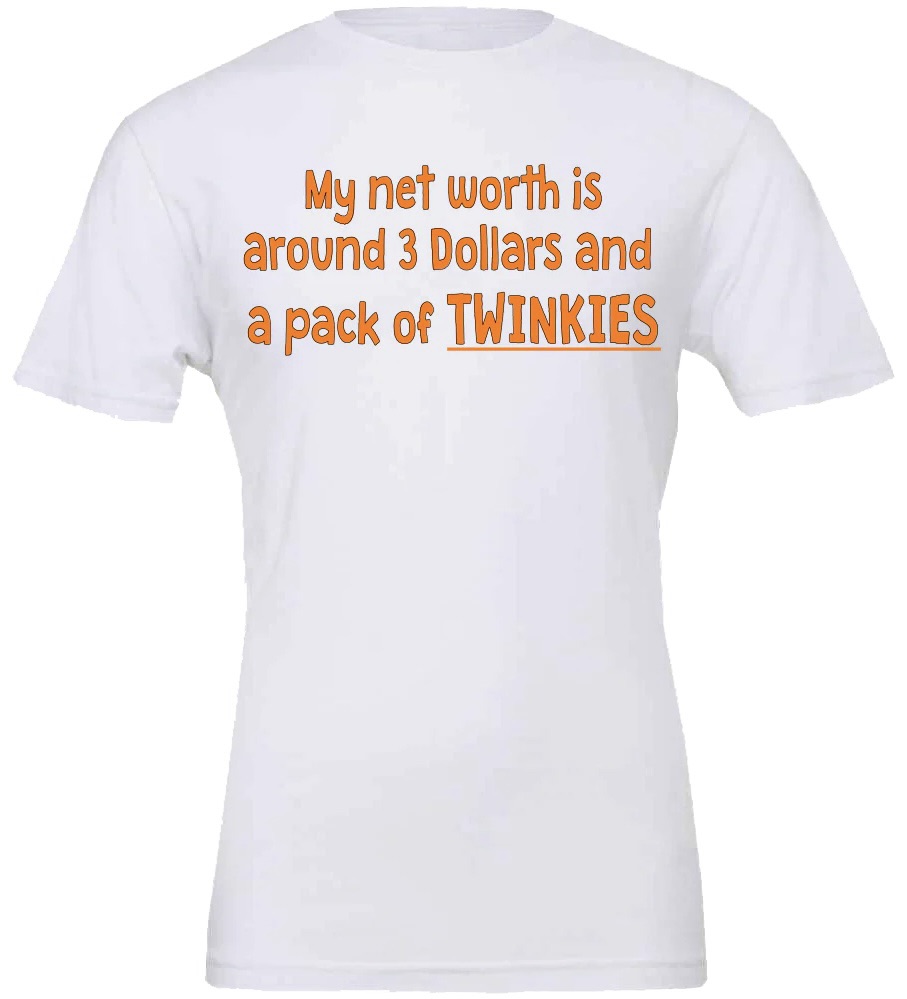
The Ultimate Flex

Showing off your money and achievements is a timeless thing. People have always been drawn to the fun and hard-to-resist habit of comparing ourselves and showing off what we’ve got. We’re always trying to keep up with those around us, constantly watching others’ successes and seeing how they stack up against our own. Social media has really made this even more intense, since now we’re seeing a much bigger picture. With just a quick look, we can see the best parts of people’s lives. Plus, we can peek behind the scenes of the super rich and famous, which we never could before.

We might not even realize we’re doing it— comparing ourselves to others. I’ve personally noticed this unhealthy habit over the past couple of years. So, a few years ago, I decided to limit each social site to 30 minutes or less per week. It’s just enough time to check notifications, find local events, or shop on local marketplaces. And, of course, a little bit of scrolling, since I’m human. But, to be honest, I almost find it repulsive to scroll now. It’s like, wow, this is silly!

Guess what? My social media detox actually turned out to be a fantastic mental health boost! It was so empowering to step back and not be constantly worried about what others think or say about everything.

As I went through this social media cleanup, I noticed something fascinating: how we, as a society, show off. “Flexing” is just another way to say “flaunting.” And it seems our flexing and comparing really shape how we act.

So, what does showing off usually mean to us? I’d say it often comes down to wanting others to see us as successful, wealthy and happy.

It’s a bit disappointing when the things we show off don’t always truly represent what we’re trying to highlight. Consider those $80k cars, $50k home renovations, $50k weddings, and $10k vacations—they might not always actually mean wealth, success, or happiness. But in places like the United States, we’re often taught that these things are the signs of success.

It’s not to say that a brand new car doesn’t bring some excitement, or that an expensive wedding or vacation doesn’t create memories that last a lifetime.

So, the real question is: could we experience the same joy, excitement, and memories without spending so much? Or are we just trying to measure ourselves against what we see others have, thinking that’s what we need? It’s worth wondering how much of what we feel about what we need or want is really our own, and how much is shaped by what we see others doing. That’s a thought-provoking question.

To help answer that, I’ve often thought about an interesting social experiment. Play along with me for a second and let your imagination wonder.

Imagine you’re heading to the store tomorrow, and you start spotting people wearing black shirts with white numbers and letters on them. As you get closer, you notice they’re all in the same style. After a few, you realize they’re all balance sheets, with “net worth” at the bottom followed by numbers. It’s a bit strange, you think.

Then, over the next week, you start seeing more of these. It’s like they’re everywhere! You see balance sheet memes popping up on social media. After a quick search, you realize this is a new trend. It’s a way to show off your net worth. Those with very low or negative numbers are probably feeling a bit embarrassed by their numbers and can’t seem to find a date. Just a few weeks prior, their lifestyle was super valuable in the social pecking order with their fancy car and lavish life. Now, all the attention seems to be on those with big net worth numbers. Suddenly, the person driving a 15-year-old Camry is the “it person.”

In this wild situation, think about how quickly everyone’s actions would shift all over the world.

Imagine if folks with substantial bank accounts started to see their social standing and online presence grow. YouTube videos about being frugal would explode in popularity, DIY projects would become the norm, and buying things without thinking would be seen as unappealing. New businesses would spring up, all geared towards saving money and investing more. Suddenly, driving a $100,000 car might not be the ultimate status symbol anymore. The notion of living beyond one’s means and believing you can always afford it would likely disappear. What we value would definitely change.

Would we be happier?

It really shows how much of what we see and do is shaped by the comparison trap. It would be a fascinating social experiment to see how this plays out, while also keeping track of happiness levels over time.

I suppose a blend of both approaches is a happy medium. But the lines can and do easily blur. I constantly evaluate big purchases. Is this a need? A want? Will it bring lasting value and joy or is it a certain level of ridiculousness that will offer but a quick dopamine hit, followed by a plunge back down to consumer purgatory?

Over the past 16-17 years, I’ve often pondered what motivated my own actions. It seems like it all came down to what I considered the cooler thing. Was it wearing a big cowboy hat and playing the part, or a more understated cowboy hat with a herd of cattle and tons of land? I never wanted to be just a show-off without any real substance or resources. Or as they say in Texas, “all hat and no cattle.” Ultimately, who and what I valued shaped my actions, and it just so happened that my values were quite different from what most people valued.

What would your t shirt say?

It’s All About The Expenses..

The personal finance space is vast and overwhelming. Everyone would love to be financially secure, but where do you start? What is the secret to getting ahead? Are there a few simple action steps you can do now that pay huge dividends throughout your life? See what I did there? you’re welcome.

Much like investing my money and ultimately seeking a satisfactory return, I like action steps that require little upfront time yet provide a windfall of lifelong benefit returns. Think of this as a personal finance hack. It’s so simple yet almost nobody outside of personal finance nerds such as myself actually do it. But this is to good not to share. What is this life altering free hack? Know what you spend money on. Boom. Done. Ok ok, I’ll elaborate.

When I say “know what you spend money on” I don’t mean tell me your bills such as your mortgage, cell phone and your utility cost. Everyone knows their bills almost to the penny, and that’s good too. But the real value comes from knowing your total spend. For example, food, gas, random trips to target, gifts, travel or even random vending machine purchases etc. Every penny is key. Looking at your bills and all your discretionary spending together gives you what your total monthly expenses are. This is key. So why is this such a big deal? With this data you can answer so many questions about the past and future. Suddenly things are crystal clear. This clarity brings a sense of calm and focus. Let’s talk about the benefits.

Perspective If you’ve been struggling financially, which let’s face it, a lot of people are the days, having accurate data on where your money is going helps to have perspective. You may be thinking, who the hell cares about perspective when you are broke?! Stay with me, it will be worth it. Take a second to write down what you think you spend a month on your total food costs. Not just groceries but take out, restaurants and anything else that you would classify as “food.” Then try keeping receipts for a month for all these food items. Try to be as accurate as possible. I’m willing to bet your actual spending on this category will shock you. Now let’s take it one step further and keep every single receipt for a full month on every purchase you make. Again, this number may shock you. Little mindless purchases add up to big spending over a 31 day period believe me. Once every penny is accounted for, next let’s compare it to your total take home pay for the same month. If done correctly you should have a very accurate bird’s eye view of where your money is going and what is left after all the spending has happened.

Now that you can visually see where your money went, start scrutinizing what was wasteful or excessive. If your total spend was very close to your take home pay, then this is a problem. I call this treading water. Yea you are staying afloat, but you aren’t going anywhere. And if you catch a cramp, you are toast. The title of this blog is Build The Gap. The gap meaning the difference between your income and total expenses. Some would call this free cash flow. It’s considered free because you can do whatever you like with it. If you keep track of spending accurately, then you should know your gap each month.

Now a little perspective. Spending $600 a month for a family on restaurants for an entire month may not seem excessive. Hell in todays world this may be 2-3 dinners only. But If you consistently have no gap or even negative gap, meaning more expenses than income, suddenly these dinners seem more outrageous. On the flip side if you have consistent gap, in line with your financial and lifestyle goals, then $600 is money well spent. How would you know this insight If you didn’t keep track? The answer is you wouldn’t. Operating your budget on hopes and prayers is like treading water in the middle of the ocean. Sure with the salinity in the water you may be able to stay afloat for quite a long time. You may even eventually make it to safety, but would you want to? Probably not.

I always enjoy seeing actual figures when I read peoples blogs. It’s more personal and relatable. And let’s face it it’s a natural thing for us to compare ourselves to others. This can actually be healthy in many ways. But also destructive if done for the wrong purpose. For the sake of this blog post, I’m sharing because I want to demonstrate what I would call rational exuberance and what that looks like. Use it as a benchmark for your own fanciful spending. Two rather large expenses I made in 2023 were purchasing a new car and going on a week cruise with Norwegian. The total car purchase out the door was $35,134.62 for a 2022 Camry XLE Hybrid with 15,344 miles. This was about $7,000 less than the brand new out the door figure I was getting from dealers in my area. And my cruise was $1,462.00. It should be noted that I financed 100% of the car. Reason being is despite having a 7 figure net worth I don’t keep much cash. But I do recognize with interest rates being what they are presently, the rationale for holding higher levels of cash is elevated. So I will make that adjustment going forward. That being said, I used a Line of Credit against a rental property with a teaser rate of 4.9% for 6 months to purchase the vehicle that is interest only in terms of my payment. So I have a payment of $185.92 that gets adjusted down with each payment made. So when I do my free cash flow statement each month I’m only factoring in what is required of me to pay. So the $185.92 for instance. And of course I fully expensed the entire cost of my cruise.

So where did that leave me financially?Through October of 2023, I have had a total free cash flow figure of $37,609.31 or for you monthly people, an average of $3,419.04. Keep in mind this is cash flow. I fully max out my 401k at work which is $22,500.00. But this comes out pre tax. So my free cash flow figures would be net of that. I also included in free cash flow the net income for my rental properties.

So essentially I was handed $37,609.31 to build my net worth the most intelligent way I could. What did I choose to do? Well, first I maxed out my Roth IRA. So deduct $6,500. Then I had a little debt on a HELOC from some roof replacements last year that I decided to pay off, so deduct another $10,467.00. The remainder of my free cash went to paying off the new car.

All in all, I allocated $31,000 (24,500 401k + 6,500 IRA) of retained earnings to stocks and $31,109.06 (roofs and new car) to paying off some debt. Not a bad year. And I still have a month of cash flow to go! Now, just imagine if my gap was negligible or god forbid negative. Then that car purchase would have been idiotic. Considering my situation it was not a big deal at all. This is perspective. And keeping spending and investing in the proper perspective is imperative to being financially successful.

Work Backwards let your mind wander to the future. Where would you like to be financially? Paid off house? 1 million in retirement accounts and debt free? Write it all down. Then calculate how much you need to put away each month. Work backwards. Based on your present levels of income and expenses are your goals achievable or so adjustments need to be made? If you don’t know your expenses to the penny it’s nearly impossible to plan for things like this. You are operating under the hope and prayer method.

Make More or Spend Less a cool thing about getting ahead financially is you can take many approaches. Remember, the secret sauce is your gap. The difference between what you bring in and what you spend. If you are a high earner bringing in 25k a month, and you keep your spending like you were a broke college student and you are saving and investing 22k a month or 264k a year, then you will get rich very fast assuming you do intelligent things with your gap. For me personally. I’m an average guy with average earning power and I would argue below average skills. So taking the high earner approach seemed like a reach. And I didn’t want to sit around wasting time, thinking well, if I don’t make a lot of money I can’t get ahead. Hell with that. Give yourself a raise by spending less. After all is said and done, your free cash flow is indifferent if it came from making more or spending less. It’s all the same. It’s free cash. Period.

Suppose you say to reach my goals I need to have $3,500 a month of gap. that’s 42k a year to pay off your debt and then invest. Over a period of time this will get you to your goals. Well you can sit around and wait for some huge income opportunity. And if it doesn’t come you use that as an excuse. Or, you can say ok, I’ll be a frugal badass, have a more efficient lifestyle and cut my expenses by $3,500. Your gap won’t know whether it came from more money or spending less. And I’m guessing your future self won’t care either. And an added benefit is you will have learned to get the same level of happiness on far less money. And if I’m honest, you will likely be happier as a result than you were before. Because now your gap has a purpose. It’s working for you. And that progress and growth takes on a happiness of its own.

Be Lazy And Get Rich

I love stocks. Anyone that knows me knows this. It’s a true and natural love. Unconditional. The reason for this, 1) I view them as owning a piece of American business. 2) I recognize that they will be the gift that keeps on giving. 3) It is really a lazy asset class, meaning I don’t need to do anything and 4) I don’t need to know anything either. You may be wondering how can that be? You don’t need to do or know anything?! Yes. That’s the magic of the stock market. In fact, I often make the case that this is why they are my favorite asset class. I can let the best CEO’s in the world run them and I can just sit back and enjoy the ride. What you need it discipline to keep buying. And to be educated on want you really own. This education should breed confidence. So I guess I lied a tad. But you can certainly get all the education you will need to be successful from this blog. Anything more is probably unnecessary.

Owning a stock is very much like being a silent partner in a company. The company needed your capital to grow. In exchange for your capital, you are a part owner. If you picked a solid company, earnings should grow over time. And so too will the value of your share or shares. The best part is you get to let someone else run the business. That’s not your job. You are a capitalist after all.

But let’s be real, picking stocks takes skill. You need to understand accounting, read financial statements and have a pretty good sense of the difference between price and value. So how can I get away with saying you don’t need to do anything or know anything? Index funds. All you have to do to be wealthy is buy a Total Market Index Fund, every month. You don’t have to know how to time the market. You don’t need to know which stocks to pick. You don’t need to know when to sell either. And you damn sure don’t need to study accounting. You simply manage your personal cash flow, take the excess each month, and buy stocks. Easy peasy. It’s that simple. Admittedly this does take a level of discipline. Living below your means that is. But hey, nothing worth having is without some element of sacrifice. And would you really cherish the accomplishment later without said sacrifice? Probably not! So buckle down and double down!

We all live hectic lives with our careers, children if you have them and maintaining households. For most people, setting themselves up financially is an after thought. Where do I even begin? It’s all to complicated and risky. And thats why stocks are so amazing. With a simple click of the mouse, or even automatically, you can buy a cross section of American business. Best of all, the best CEO’s in the world will be working hard each and every day to increase the value of your shares. You can have this running in the background. Taking on a life of its own. Making you rich without you even knowing it. In fact, if you never checked it, it would probably be to your advantage!

I like to think of someone’s investing career as 40 years. From 20 years old to 60 generally. With that, I’d like to show two different photos. The first one is the returns of the S&P 500 since 1965. The second is the value of your portfolio if you Invested $12,000 a year from age 20 to 60, with a compound interest rate of 10.5%, which is what the market has done since 1965 on average according to the first photo. Sometimes, being lazy is the right move.

Not Another Blog..

First off, why am I blogging? Because I lhave thoughts I’d like to write down and keep track of. My thinkings if you will. I read a lot. I process a lot of information, and over the past 15 years of learning about investing and business almost obsessively, I’ve formed some rather strong opinions and learned some valuable skills that have served me well. Some of which are none to popular. So, this blog will act as kind of a financial journal, a collection of what I’m personally doing, what I’ve learned, the mistakes I’ve made and all that fun shit in between. From time to time I will share actual numbers of my finances, to offer a blend of self deprecation and realness. I personally enjoy actual figures in the blogs I follow. From this, I hope someone can learn something, and maybe I can learn some stuff too. As I learn new things, some of which will be incredibly nerdy, I will try to blog about it for future reference and or for your reading pleasure.

You may be wondering what qualifies me to write publicly about business, personal finance and investing. Full disclosure, I’m not qualified at all. I live a worthless existence spent reading the newspaper, books on investing, biographies and from time to time an annual report I find interesting. But I have somehow through strokes of luck, discipline and grit amassed well over a seven figure net worth, even excluding my primary residence which is paid off. This net worth is 55 times my annual spending, since I’ve done a solid job on the debt side of my balance sheet. Presently, this fully qualifies me for early retirement and then some. When I reflect on this success, I’ve come to realize that there are some habits, knowledge and skills that are both useful and replicable. So why the hell not share. I also have plenty of screw ups you can learn from too. Why should you have to make the same mistakes I did? So there you have it. I’m an unqualified business nerd who reads the newspaper. I would consult a professional before taking anything I talk about on this blog seriously.

One last point on the name of this blog. Build The Gap? What does that mean? Well, the gap equals the difference between income and expenses. Better known as free cash flow. That gap is where the magic happens. It is where your focus should be. Whether you are analyzing an investment or evaluating your personal finances, knowing that gap is incredibly important. Dare I say it, the most important. It is how my net worth was built. I have spent the better part or my adult life slowly building that gap. My main job as I see it is taking the free cash flow accumulated and reinvesting it into assets that then produce more cash flow.