Showing off your money and achievements is a timeless thing. People have always been drawn to the fun and hard-to-resist habit of comparing ourselves and showing off what we’ve got. We’re always trying to keep up with those around us, constantly watching others’ successes and seeing how they stack up against our own. Social media has really made this even more intense, since now we’re seeing a much bigger picture. With just a quick look, we can see the best parts of people’s lives. Plus, we can peek behind the scenes of the super rich and famous, which we never could before.
We might not even realize we’re doing it— comparing ourselves to others. I’ve personally noticed this unhealthy habit over the past couple of years. So, a few years ago, I decided to limit each social site to 30 minutes or less per week. It’s just enough time to check notifications, find local events, or shop on local marketplaces. And, of course, a little bit of scrolling, since I’m human. But, to be honest, I almost find it repulsive to scroll now. It’s like, wow, this is silly!
Guess what? My social media detox actually turned out to be a fantastic mental health boost! It was so empowering to step back and not be constantly worried about what others think or say about everything.
As I went through this social media cleanup, I noticed something fascinating: how we, as a society, show off. “Flexing” is just another way to say “flaunting.” And it seems our flexing and comparing really shape how we act.
So, what does showing off usually mean to us? I’d say it often comes down to wanting others to see us as successful, wealthy and happy.
It’s a bit disappointing when the things we show off don’t always truly represent what we’re trying to highlight. Consider those $80k cars, $50k home renovations, $50k weddings, and $10k vacations—they might not always actually mean wealth, success, or happiness. But in places like the United States, we’re often taught that these things are the signs of success.
It’s not to say that a brand new car doesn’t bring some excitement, or that an expensive wedding or vacation doesn’t create memories that last a lifetime.
So, the real question is: could we experience the same joy, excitement, and memories without spending so much? Or are we just trying to measure ourselves against what we see others have, thinking that’s what we need? It’s worth wondering how much of what we feel about what we need or want is really our own, and how much is shaped by what we see others doing. That’s a thought-provoking question.
To help answer that, I’ve often thought about an interesting social experiment. Play along with me for a second and let your imagination wonder.
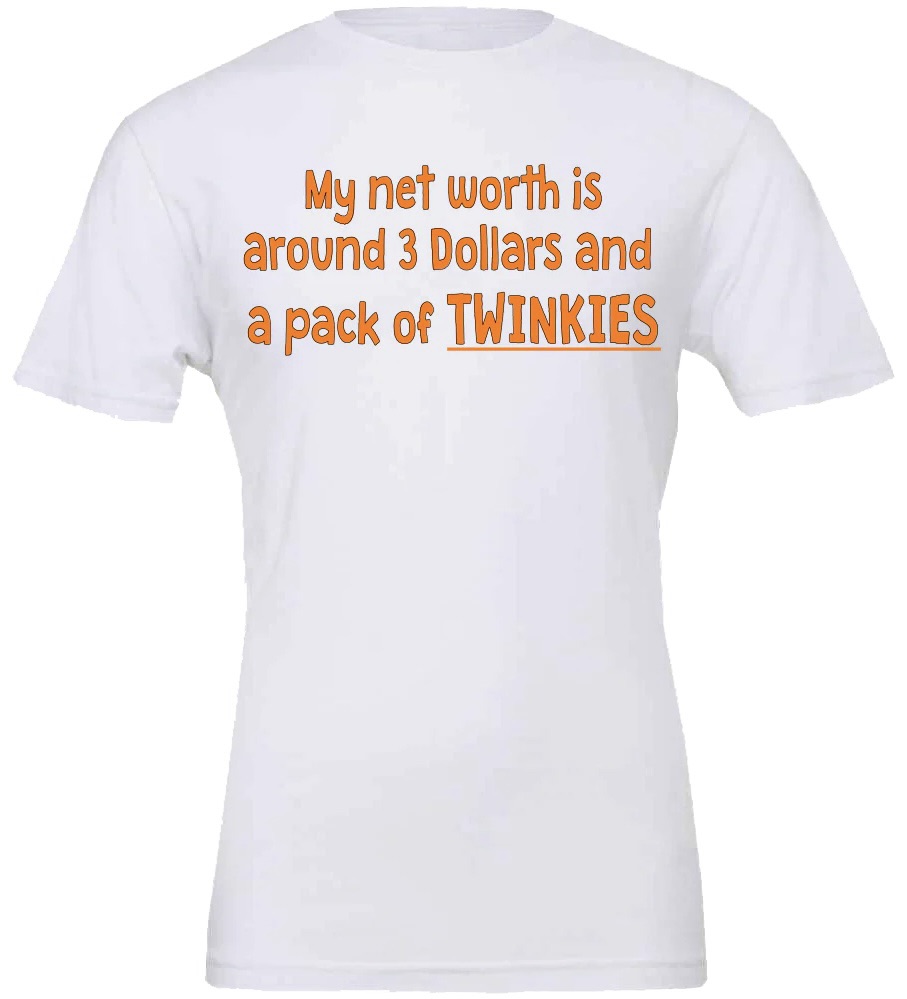
Imagine you’re heading to the store tomorrow, and you start spotting people wearing black shirts with white numbers and letters on them. As you get closer, you notice they’re all in the same style. After a few, you realize they’re all balance sheets, with “net worth” at the bottom followed by numbers. It’s a bit strange, you think.
Then, over the next week, you start seeing more of these. It’s like they’re everywhere! You see balance sheet memes popping up on social media. After a quick search, you realize this is a new trend. It’s a way to show off your net worth. Those with very low or negative numbers are probably feeling a bit embarrassed by their numbers and can’t seem to find a date. Just a few weeks prior, their lifestyle was super valuable in the social pecking order with their fancy car and lavish life. Now, all the attention seems to be on those with big net worth numbers. Suddenly, the person driving a 15-year-old Camry is the “it person.”
In this wild situation, think about how quickly everyone’s actions would shift all over the world.
Imagine if folks with substantial bank accounts started to see their social standing and online presence grow. YouTube videos about being frugal would explode in popularity, DIY projects would become the norm, and buying things without thinking would be seen as unappealing. New businesses would spring up, all geared towards saving money and investing more. Suddenly, driving a $100,000 car might not be the ultimate status symbol anymore. The notion of living beyond one’s means and believing you can always afford it would likely disappear. What we value would definitely change.
Would we be happier?
It really shows how much of what we see and do is shaped by the comparison trap. It would be a fascinating social experiment to see how this plays out, while also keeping track of happiness levels over time.
I suppose a blend of both approaches is a happy medium. But the lines can and do easily blur. I constantly evaluate big purchases. Is this a need? A want? Will it bring lasting value and joy or is it a certain level of ridiculousness that will offer but a quick dopamine hit, followed by a plunge back down to consumer purgatory?
Over the past 16-17 years, I’ve often pondered what motivated my own actions. It seems like it all came down to what I considered the cooler thing. Was it wearing a big cowboy hat and playing the part, or a more understated cowboy hat with a herd of cattle and tons of land? I never wanted to be just a show-off without any real substance or resources. Or as they say in Texas, “all hat and no cattle.” Ultimately, who and what I valued shaped my actions, and it just so happened that my values were quite different from what most people valued.
What would your t shirt say?