The Ultimate Flex

Showing off your money and achievements is a timeless thing. People have always been drawn to the fun and hard-to-resist habit of comparing ourselves and showing off what we’ve got. We’re always trying to keep up with those around us, constantly watching others’ successes and seeing how they stack up against our own. Social media has really made this even more intense, since now we’re seeing a much bigger picture. With just a quick look, we can see the best parts of people’s lives. Plus, we can peek behind the scenes of the super rich and famous, which we never could before.

We might not even realize we’re doing it— comparing ourselves to others. I’ve personally noticed this unhealthy habit over the past couple of years. So, a few years ago, I decided to limit each social site to 30 minutes or less per week. It’s just enough time to check notifications, find local events, or shop on local marketplaces. And, of course, a little bit of scrolling, since I’m human. But, to be honest, I almost find it repulsive to scroll now. It’s like, wow, this is silly!

Guess what? My social media detox actually turned out to be a fantastic mental health boost! It was so empowering to step back and not be constantly worried about what others think or say about everything.

As I went through this social media cleanup, I noticed something fascinating: how we, as a society, show off. “Flexing” is just another way to say “flaunting.” And it seems our flexing and comparing really shape how we act.

So, what does showing off usually mean to us? I’d say it often comes down to wanting others to see us as successful, wealthy and happy.

It’s a bit disappointing when the things we show off don’t always truly represent what we’re trying to highlight. Consider those $80k cars, $50k home renovations, $50k weddings, and $10k vacations—they might not always actually mean wealth, success, or happiness. But in places like the United States, we’re often taught that these things are the signs of success.

It’s not to say that a brand new car doesn’t bring some excitement, or that an expensive wedding or vacation doesn’t create memories that last a lifetime.

So, the real question is: could we experience the same joy, excitement, and memories without spending so much? Or are we just trying to measure ourselves against what we see others have, thinking that’s what we need? It’s worth wondering how much of what we feel about what we need or want is really our own, and how much is shaped by what we see others doing. That’s a thought-provoking question.

To help answer that, I’ve often thought about an interesting social experiment. Play along with me for a second and let your imagination wonder.

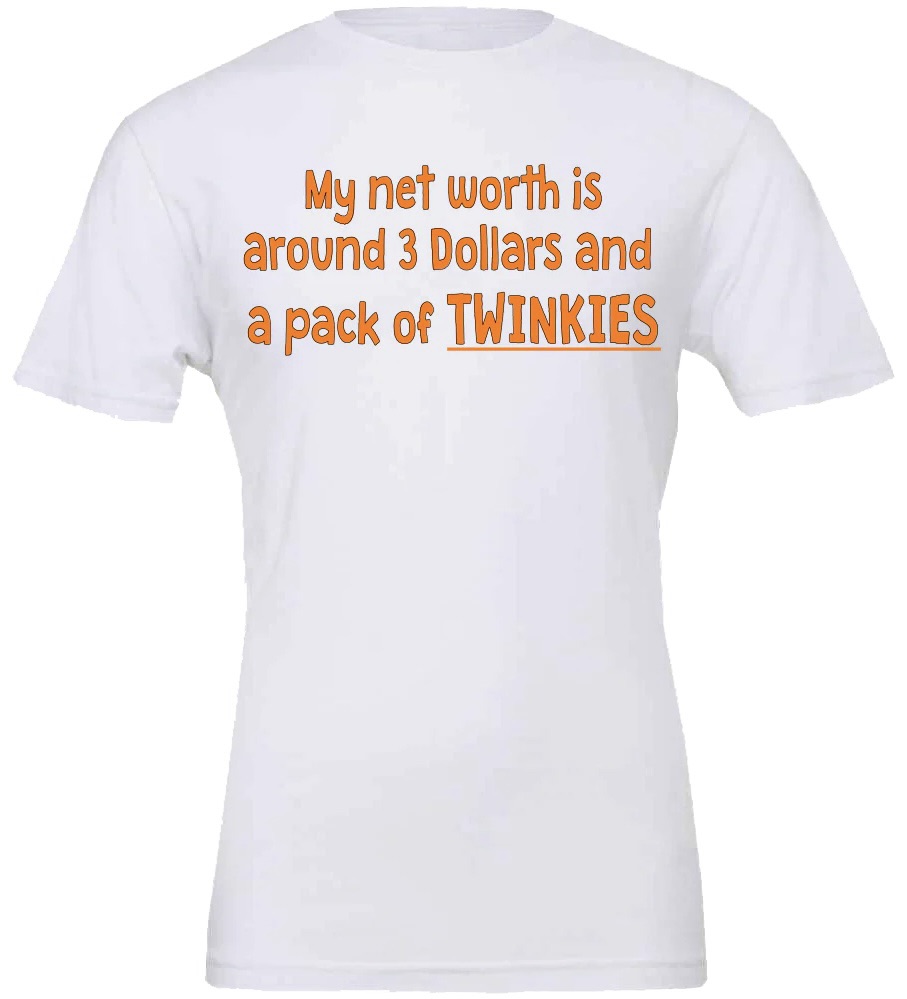
Imagine you’re heading to the store tomorrow, and you start spotting people wearing black shirts with white numbers and letters on them. As you get closer, you notice they’re all in the same style. After a few, you realize they’re all balance sheets, with “net worth” at the bottom followed by numbers. It’s a bit strange, you think.

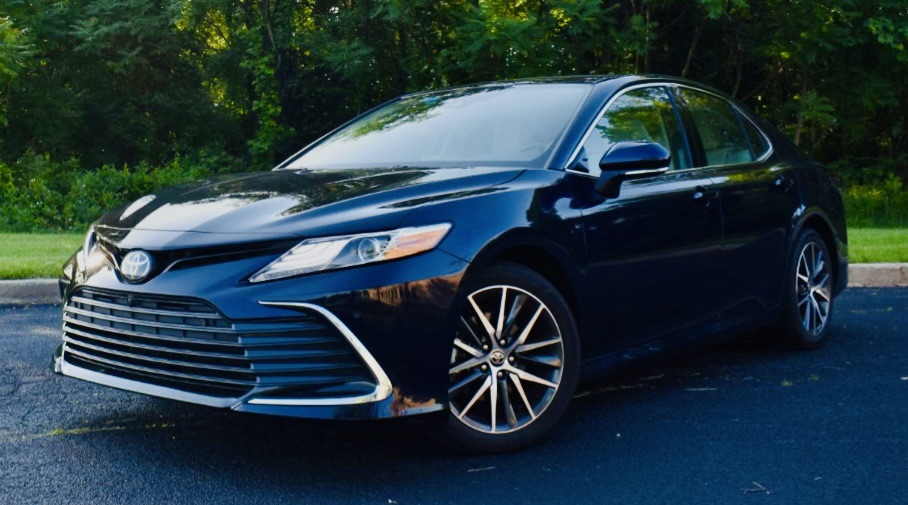
Then, over the next week, you start seeing more of these. It’s like they’re everywhere! You see balance sheet memes popping up on social media. After a quick search, you realize this is a new trend. It’s a way to show off your net worth. Those with very low or negative numbers are probably feeling a bit embarrassed by their numbers and can’t seem to find a date. Just a few weeks prior, their lifestyle was super valuable in the social pecking order with their fancy car and lavish life. Now, all the attention seems to be on those with big net worth numbers. Suddenly, the person driving a 15-year-old Camry is the “it person.”

In this wild situation, think about how quickly everyone’s actions would shift all over the world.

Imagine if folks with substantial bank accounts started to see their social standing and online presence grow. YouTube videos about being frugal would explode in popularity, DIY projects would become the norm, and buying things without thinking would be seen as unappealing. New businesses would spring up, all geared towards saving money and investing more. Suddenly, driving a $100,000 car might not be the ultimate status symbol anymore. The notion of living beyond one’s means and believing you can always afford it would likely disappear. What we value would definitely change.

Would we be happier?

It really shows how much of what we see and do is shaped by the comparison trap. It would be a fascinating social experiment to see how this plays out, while also keeping track of happiness levels over time.

I suppose a blend of both approaches is a happy medium. But the lines can and do easily blur. I constantly evaluate big purchases. Is this a need? A want? Will it bring lasting value and joy or is it a certain level of ridiculousness that will offer but a quick dopamine hit, followed by a plunge back down to consumer purgatory?

Over the past 16-17 years, I’ve often pondered what motivated my own actions. It seems like it all came down to what I considered the cooler thing. Was it wearing a big cowboy hat and playing the part, or a more understated cowboy hat with a herd of cattle and tons of land? I never wanted to be just a show-off without any real substance or resources. Or as they say in Texas, “all hat and no cattle.” Ultimately, who and what I valued shaped my actions, and it just so happened that my values were quite different from what most people valued.

What would your t shirt say?

6 Month Check In

Time to take stock and see what’s what for 2025 so far. With half the year over, it’s as good time as any to check your progress and make sure you are still headed in the right direction for whatever your goals are.

For the year I’ve retained $20,151.25 of free cash flow. From this free cash I’ve purchased $15,566.00 in stocks and transferred $4,000 to a High Yield Savings Account.

On top of the free cash flow that has been allocated, $12,842.00 in pre tax money has gone into the 401k through my employer. So a total retained earnings of $32,993.00 so far for the year.

No debt has been added.

As far as the more balanced approach I’ve been taking to life and money, I’d say that has been going really good. I’m like over 2 years into this new Beau and it’s been interesting to say the least. I find myself having more time for me, friends and family. Which has been pretty cool. Still no regrets for the many years of grinding, but it’s sure nice to take my foot off the gas!

I have been consistently spending what I like to call “just because” money. Sometimes when I do my monthly numbers I find myself kinda shocked how much I spent on stupid random shit.

And when I feel like my work-life balance is out of whack, I will take a few weeks off from any extra shifts and just relax. I usually take overtime only when it’s convenient and decline when it isn’t. I’ve used sick days rather than pushing through like I would have in the past. So long story short, it’s been good.

I’m 39, and next month I will turn 40. I started investing when I was the ripe age of 22. I remember going to the Meryl Lynch in Stuart, FL. to open my first IRA account. They declined my money because I didn’t have enough assets. I understood at the time. No hard feelings. But the advisor there told me that I’d have a million dollars by retirement if I started that young and kept at it. I remember thinking that’s kinda crazy and probably not feasible. Well, I’m happy to the report that the million dollar mark has been hit at 39. Needless to say, a celebratory cocktail was had. It should be noted this is just money invested in stocks. Doesn’t include real estate equity or cash.

No special formula or secrets to offer, sorry. Just had a lot of luck, kept my living expenses super cheap and Invested aggressively and consistently. And the rest took care of itself.

Our capital markets are incredible here in the U.S. and we have some of the best companies in the world that are constantly working to increase value for not only their shareholders but their customers. I simply bought into that idea with full confidence.

Hope the year is going good! Maybe next time I write I’ll be the owner of a new Lexus 😬. Keep embracing the grind. Go Dolphins! 🐬

A Masterclass From Warren Buffett

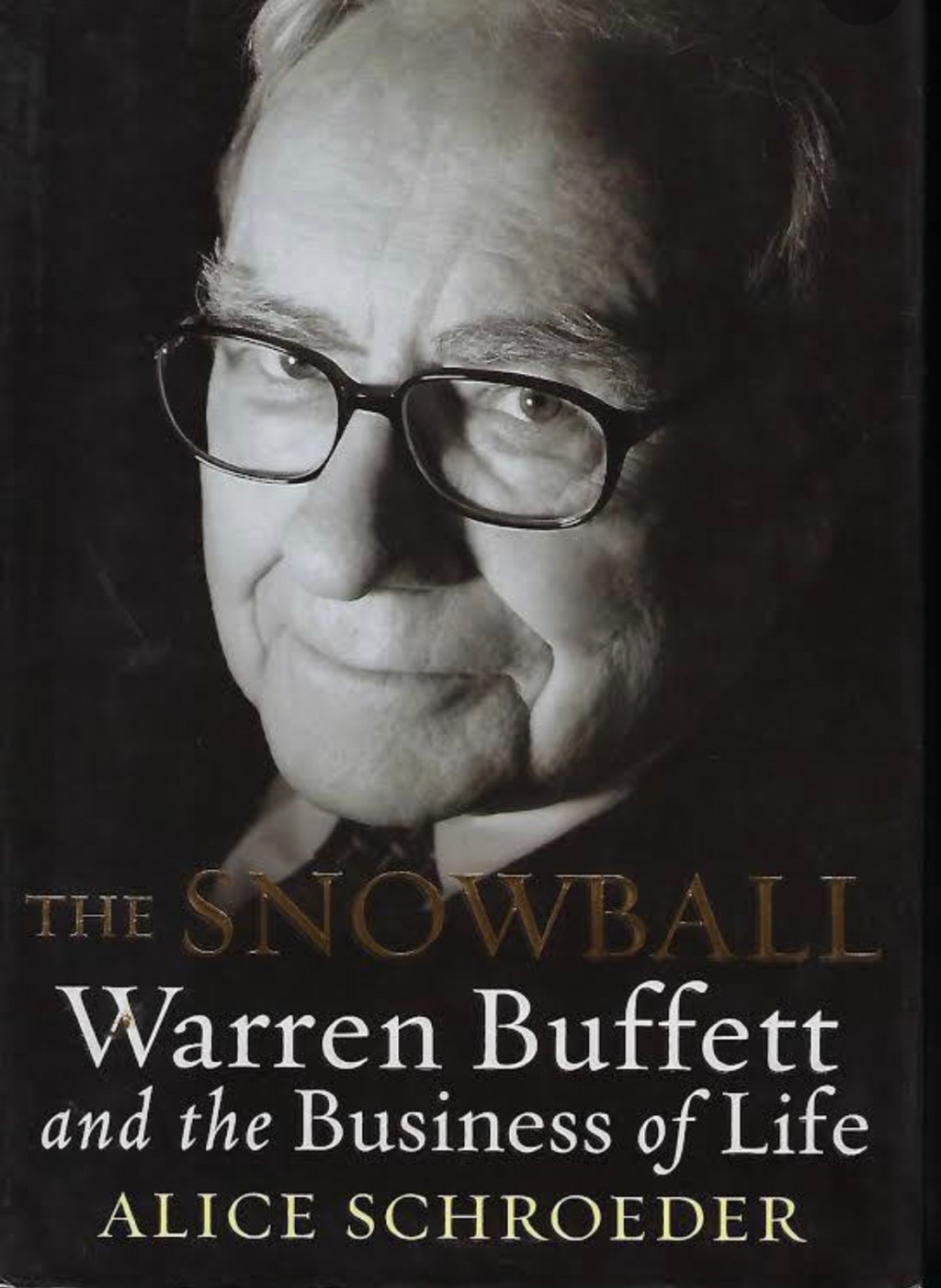
Warren Buffett is 94 years old. And while he is considered a legend in the investment world for his incredible record over decades, from time to time throughout his career, he has been ridiculed for having lost his way.

In fact, just recently he was criticized for holding too much cash and not making any significant investments or stock repurchases with the massive $338 billion of cash on the balance sheet. This was at the same time stocks powered higher for two back to back years of 20%+ gains.

What I see from Buffett today is reminiscent of the famous 1999 speech he gave in Sun Valley in front of the who’s who of business elites that their stocks were over valued and investors should tread carefully. He was openly mocked then just like now. Many said he just didn’t understand technology stocks and he was simply out of touch with the new tech economy.

And of course we all know what happened in the stock market over the next 2-3 years, stocks tanked big time.

On top of not doing much of anything over last couple years while the stock market powered higher, Buffett didn’t even repurchase shares of Berkshire, which is a preferred way to return capital to shareholders. (When you repurchase your own shares, the earnings of the company are spread amongst fewer shares thereby increasing the earnings per share at a higher rate than the actual earnings of the company.)

However, in doing nothing, he showed the world once again why he is the greatest capitalist of all time. And it is really a lesson to us all. Sometimes, doing nothing IS the best move. It’s also the hardest move. When everyone is making huge gains and the money spigot is flowing streams of green, it is incredibly hard to be rational.

Not only did Berkshire not make any significant investments or repurchase their own stock but they sold off big pieces of some companies that they owned, nearly at the peak and slowly built up their cash position. For example, Berkshire sold 2/3 of its massive Apple position amongst other companies in the portfolio for a total of $166 billion dollars.

Recognizing that things looked very expensive Buffett decided that holding cash was THE ultimate flex. Now with these uncertain tariff wars, recession fears and consumer confidence indexes tanking, Berkshire is ready to pounce.

Berkshire has more cash than Apple, Coca Cola, Bank of America and American Express combined.

Clearly Wall Street loves the moves Buffett has made. Currently the year to date performance of the S&P 500 is -3.56% while Berkshire is 16.89%.

All great things must end however. It’s one of the few certainties in life. With that being said, Buffett has decided to step down from the CEO role Jan 1st 2026 after a 60 year career as CEO. He has put the company in an envious position. What Warren Buffett did in business will likely never be replicated again. It was the perfect combination of brilliance/focus, market conditions and timing. $100 dollars invested in Berkshire Hathaway in 1965 would be worth roughly $5.5 million today.

When I first learned he was stepping down I just had to smile. What a fantastic end to a legendary career. Going out on top.

Stock Market Wiplash

I like to think I’m 100% bullish and long term with regard to U.S. stocks. But when you lose $141,500 in a matter of a month and a half, a little financial self reflection is only natural.

Don’t get me wrong, I love volatility for the simple reason I’m able to purchase quality companies at a cheaper price. And of course corrections and bear markets are par for the course with regard to long term stock ownership. But what we witnessed last week….was Different. Dare I use the phrase most abhorred on Wall Street “this time is different.”

It was a violent crash that was all but surely self inflicted. In a matter of two days after April 2nd which was dubbed “Liberation day” by the current administration, stocks lost over 10%. This was two of the worst days on Wall Street since the early days of Covid. The bloodshed continued until the 9th when we had one of the single best days on Wall Street with stocks roaring up 9.5% on the announcement by the Trump administration that there will be a 90 day pause on all retaliatory tariffs above the baseline 10% that was implemented.

The stock market volatility surely got the presidents attention, but what really got his attention was the sudden and massive overnight selling of Treasuries by both the hedge fund community and foreign investors. This is a huge problem. Treasures should be thought of as a safe place to turn to in highly volatile times. In fact, they are referred to as a safe haven asset. The fact that they saw their biggest overnight decline since 1982 was the financial equivalent to “Houston, we have a problem.” Confidence in our markets had crashed. Pushing up interest rates drastically overnight.

This is a major problem for consumers who want to borrow, but also for the government who has to pay interest on those Treasuries. Needless to say, this was pushing our economy to a cliff with a drop off of 2007 Great Recession proportions.

I won’t get into the politics of what is happening. Suffice it to say, dealing with a $1.2 trillion dollar trade deficit is no easy task. $294 billion of which is from China alone. Make no mistake, although not a huge priority for the American public, this is a huge and growing problem.

Imagine for a second being an incredibly wealthy and successful farmer. You produce everything you need and then some. This success can make one feel entitled to a lifestyle that is beyond the scope of what one can reasonably afford. So you start to purchase luxuries from others in town. Expanding your lifestyle as much as you can. Since you can’t really afford these items, you simply give up small pieces of ownership of your farm. Slowly eroding your control. When we run a trade deficit, we don’t actually have the money to pay for that. So we issue IOU’s from the government. Usually this is the form of U.S. Treasuries but it can also be real estate or any number of assets. Our trade deficit as I mentioned is $1.2 trillion dollars and is equal to 3.9% of our GDP. GDP is the value of all goods and services produced. This deficit has been negative and growing since 1977 as illustrated here:

Currently the entire accumulated wealth of our country from both private citizens and businesses is roughly $156 trillion dollars and we have $8.5 of that is held outside of the U.S. Just like the farmer who consumes way more than he can produce and sells off portions of his or her farm, America is slowly selling and mortgaging off its wealth to others.

Like debates there are two sides to every argument. We can afford to over consume and run deficits because we are an incredibly wealthy country. We have only 4.2% of the world population yet produce 26.4% of the world’s GDP. And allowing smaller countries around the world to “take advantage” of us in trade is much the same way that children mooch off their parents for a while until they become contributing members of society. As a parent you want to see your kids do well, I hope. You know that if you produce successful children who contribute things to society, the world is a better and more prosperous place for everyone.

As I mentioned earlier, China is the source of our largest trade deficit. And although this is not great, it has benefits. For one, we have had an Influx of cheap goods which has kept inflation low for 20 plus years. Also, we have a very large and rich country to sell stuff to that didn’t exist 70 years ago. You think Coca-Cola or McDonald’s cared about the Chinese market 50 years ago? Now it’s likely the fastest growing part of their businesses.

But with that good there are repercussions. Mainly the loss of the manufacturing jobs across many of our cities and the transfer of wealth to other nations. As you can see this is a complex problem. This is a globalized economy with supply chains all over the world. Throwing a grenade in the middle of it will likely produce more weeks like we just had if it persists.

My response is to do very little. In the months leading up to Inauguration Day I had anticipated some turbulence in markets based on what was being proposed. And I also thought stocks as a whole were pretty expensive. Take Warren Buffett’s Berkshire Hathaway, which happens to be my largest holding. They have a record $340 billion give or take of cash that isn’t being invested. That should tell you something. So, I too built a 1.5-2% cash position. I also have 30% of my money split between international stocks and short term bonds. So I haven’t been hit as hard as a 100% U.S. portfolio.

I have used some of my cash to purchase stocks after this recent pullback. After all, be “greedy when others are fearful.” And, since my international and short term bond portion has not gone down as much, I did a rebalance on my portfolio which sold some international stocks and bonds and purchased U.S. stocks, after the pullback. I figure at least I’m doing something during this crazy time. Stocks will very likely be worth more 10-20 years from now so drastic panic selling and exiting stocks isn’t necessary for the long term investor. But the few little things I DID DO at least make me feel like I’m doing something. Going forward I haven’t decided to continue building up cash or investing. I suppose I will watch carefully and see where the dust settles. Happy Investing!

Be Greedy When Others Are Fearful

Wall Street is a crazy place. The minute you think you have it figured, it will inevitably prove you a fool. The famous phrase of bulls, bears and bum steers is parlance for the emotional roller coaster that exists on the street.

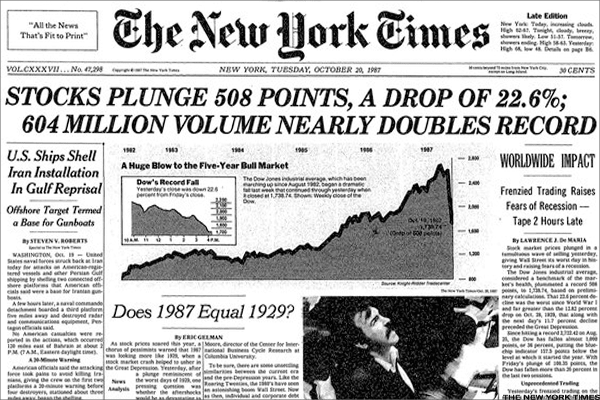
The post image above is a famous stock market crash called Black Monday and it happened October 19, 1987. In fact, it was one of the single worst days on Wall Street. Of course, if you’ve been around long enough you likely will recall many bad periods in the stock market. With all this doom, what is one to do? Say the hell with the market and park your savings in cash? First, let’s take a look at how stocks did in the year 1987 and thereafter. S&P Returns (with dividend reinvestment):

  • 1987 5.1%
  • 1988 16.1%
  • 1989 31.7%

Now to more current events..

December 31st, 2022

What do you suppose the mood was like year end 2022 across the country and in particular on Wall Street? Inflation was high, coming in at 9.1% in June of 2022 on an annualized basis. This caused the Federal Reserve to begin one of the fastest rate tightening cycles in its history. They raised the federal funds rate by more than 500 basis points (5%) between March 2022 and July 2022. For consumers and governments with large debt balances, this was a shock. All of a sudden, in addition to the rapid rise in housing, food and consumer items, servicing debt just got suddenly much more expensive. To say the mood was sour is an understatement to say the least. All of this collectively sent stocks into a tailspin.

Like it or not. Fear and emotions get the best of us when it comes to money. Even the best investors of our time can fall victim to it. Realizing these flaws, how do we counter it? We just keep buying and keeping the right perspective. That’s the answer. Let’s say you bought a farm for 500k. Your intention was to hold it for a long time. What would be your biggest concern? How much it earns each year relative to what you paid is the most logical answer. If prevailing interest rates were 3-5% as they currently are and your investment was producing 50-75k of earnings each year, that’s a perfectly solid investment. You’d need not pay attention to overly optimistic or pessimistic buyers and what they’d offer you for your farm. Hopefully over time with efficiency gains and crop price increases you can grow the earnings and improve the return on equity. The year to year valuations, no matter how positive or negative, need not concern you.

With the sermon out of the way, what did I do differently following the horrible stock market of 2022? Absolutely nothing. Sure I noticed my account balance took a slashing. But I understood why it happened. I know from reading that corporate profits were still excellent. Returns on equity across Wall Street were excellent as well. So I just kept buying. Here is my total stock market purchases for 2022 and beyond:

  • 2022 $36,043
  • 2023 $31,000
  • 2024 $50,000

2022 and 2023 were a bit slower from an investing standpoint due to three roof purchases and a new car, not out of fear. Surely if I had more capital I’d have invested more. So how did this stay the course approach workout you may be wondering?

December 31st, 2024

In case you missed it, these are two front page articles of the Wall Street journal, both the last day of the year, two years apart. My how fast things can change. Admittedly, this was a rather fast turn around in the world of stocks. In fact, we have seen many periods just like this since the 2008 Great Recession. Huge price corrections followed shortly thereafter by record highs. In fact, this has become such a thing, it has its own phrase: BTD (buy the dip).

It’s probably important to note that this isn’t always the case with the stock market. We’ve become immured by a market that seems to do nothing but go up for the better part of 15-16 years. I get the feeling an unshakable confidence is stewing. You see offsets from this confidence boiling over into meme stocks and crypto currencies. After all, it’s been a long bull market with only brief corrections in between. But remember, Wall Street is a humbling place.

Let’s recall two 17 year periods from 1964-1981 and then 1981-1998. These two periods are such a fascinating case study of Wall Street. The mood towards stocks after WW2 and the Great Depression was not good. It didn’t help that profit margins across corporate America were depressed by the early 80’s thanks to the sledgehammer on the economy from the Fed Chairman Paul Volcker raising interest rates rapidly to cool inflation. This interest rate tightening cycle also acted like a noose to stocks. Yet the economy as a whole was absolutely booming. In fact, GDP during this first 17 year period rose 373%. Still, stocks were unfashionable. As a result, bargains were everywhere. Warren Buffett was famously quoted as saying that living in this era was like being “a sex crazed teenager living in a harem.” But people just did not want to own stocks.

In the period 1981-1998, interest rates dropped from a high of 13.65% to 5.09%. And GDP increased a respectable 177%. Yet business sentiment improved significantly even though the economy wasn’t any materially better than the previous 17 year period. Below is the stock market performance for the two periods.

December 31, 1964: 874.12

December 31, 1981: 875

December 31, 1981: 875

December 31, 1998: 9181.43

Bull markets, bear markets. Doesn’t matter. Keep your wits about you, keep disciplined and keep investing. Betting against America has never worked. Even long periods of awfulness eventually produce satisfactory results to the long term, consistent and patient investor.