The Book That Changed My Life

This has been a very busy year so far. I took a week cruise, had a pretty lengthy rental vacancy, bought a car and did some home projects at my primary house. Now that things are finally settling down, I’ve begun to take stock of where I am in life and the pivotal moments that altered my course in getting here. In this reflective mood, I was searching for the biggest contributor to the path I am currently on. A path I hope leads to fulfillment and early retirement. Surely I wasn’t on this path in high school or my college years. So what changed?

I’ll tell you what changed..I read a really big book. I’ll never forget when I came across the book that changed my life forever. It was right around the time when Borders the book store was going out of business and they had their inventory in the parking lot under huge tents. But first a little back story to set the table.

Admittedly, I mainly went to the book store to look at the music selection they offered or to get coffee, never much of a reader as a kid. Although I liked the idea of reading, I could never find anything to keep my interest for more than a few pages. I often had to re read the same paragraph over and over to comprehend information. Comprehension in school was always a weak subject for me. I struggled. It all seemed so boring. Comprehending what I was reading took real work. Brain work. I used to think I had a reading disability to be honest. I can recall finishing only one book as a kid, although the name of it slips my memory. Still, the idea to step into a different world, or to see the world through someone else’s paradigm was intriguing. An Introvert at heart, I pined for the ability to read, learn and discover new things. But what would interest me enough to focus my mind? This always eluded me growing up.

So I moved back to the town I grew up in June of 2007 shortly after graduating college in May of that year. I was lost to say the least. At that time I remember being so confused on who I was. What was I passionate about? What was I good at, if anything at all? I always admired those friends I grew up with who knew exactly what they were passionate about and wanted to do with their lives. I just had no idea. It was worrisome and gave me great anxiety at this time of my life to be honest. I was an average student at best, who never really applied myself and was hardly interested at all in basically any subject matter that was taught in school. This also worried me. I was craving something to be passionate about. Oddly, although I had no real passions, I always knew if I found something I cared about I would be relentless and good at it. I can get obsessed with something if I care enough.

After a few months living back home I got a job as a Nuclear Security Officer. What was intended as a transition job turned out to be a pretty good job with excellent pay and benefits. And although I had no real passions at the time, I did love the idea of being financially independent.

I can’t put my finger on exactly when the interest was piqued. I will say that my hire date was October 1st 2007, the peak of the housing financial crisis. And the town I live in was hit exceptionally hard with home prices dropping far more than national averages. Taken together, with a job that was paying me real money at a young age, I smelled a huge opportunity. Rock bottom interest rates, home prices off 60%, stocks dirt cheap, huge pay gains, no debt, living at home, no kids and somewhat ambitious. Collectively these were a set of variables that if harnessed correctly could set me up for life. I knew very little at the time, but I did see this incredible opportunity and viewed it as a once in a generation type event. This opportunity ignited a strong interest. Still, at this point I wouldn’t quite call it a passion. Nonetheless, I began devouring anything I could get my hands on that had to do with getting rich. I read everything. Although I truly believe every book I read was an important developmental piece of my story, not one book changed me like the one I was soon to find.

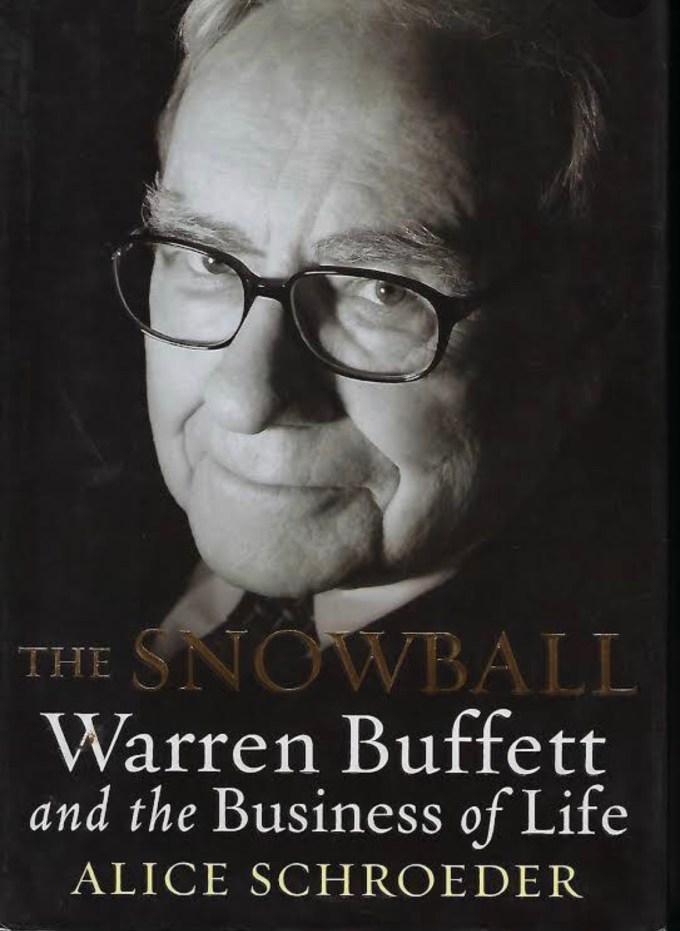
Sometime around 2010 during the bankruptcy process for Borders I found The Book. In the parking lot of the mall was all of Borders’ inventory under these huge tents. Rows and rows of books. I came across one book of this old wise looking guy. The look on his face was one that said, I know more than you. The book was The Snowball Warren Buffett and the Business of Life. Embarrassingly, I had never heard of Warren Buffett. And why this book intrigued me to this day I have no idea. It was a massive book with 787 pages of fine print and minimal pictures. The idea of ever reading it seemed daunting. But I had been reading about investing for a few years and the book was cheap so I figured what the hell. I remember reading the summary on the inside and phrases like the “Oracle of Omaha” and the “Sage of Nebraska” jumped out at me. As if he were some type of living legend. And for some reason the description of him as just a plain and simple ordinary billionaire is what sold me. I had to know who this guy was.

And so it began. I devoured that book. And it sparked a passion for business and investing that still fascinates me today.

Buffett’s story is relatable in many ways. You read about other billionaires and most if not all started a hugely successful company. In other words they created something. And while inspiring and interesting to read, it does often leave one feeling inferior. However, Buffett didn’t create anything. He is the ultimate capitalist. I don’t have the time to write out his biography in this post, but I encourage you to read his story or watch some of the biographies that have been done on him.

To summarize, he graduated from high school with roughly ten thousand bucks, invested in companies ran by others and ultimately became the richest person in the world. He takes the long view, understands value and is a brilliant investor. Some of his investments have been in plain sight, yet somehow he saw value where others missed it. Many of his investments he has owned for decades. In other words, he shuns the short term mentality that grips Wall Street. Oh, and he still lives in the same upper middle class house he bought in 1956 for $31,500. Intrigued?

You may be asking, ok but why did this book change my life? When I was younger, I can’t say I had passions, but I was incredibly curious. I would ask random questions like “I wonder how much money this store makes?” Needless to say, although I was curious about many things, I had a particular curiosity about business. I always fantasized about being a business owner and how pleasurable it must be to be in control and work with the numbers, alone at night in your office. The idea of working with “my numbers” intrigued me. Something I can have control of, optimize and compete in. I don’t think I thought of it as a passion at the time. But this book unlocked that passion.

Buffett’s approach is to buy pieces of companies in the stock market. And to approach those pieces as if you were buying the whole company. Berkshire Hathaway, which Buffett is a controlling shareholder, also owns wholly owned companies. And in these wholly owned companies he leaves the management in place. Essentially he writes a check to buy either a piece or the whole company, and says I want to buy the management too, just send me whatever excess capital you don’t need in your business. This is very different than the typical corporate raiders, or day trading masses that populate Wall Street. Buffett’s approach therefore is not of a speculative nature but that of an owner. What this taught me is I don’t have to have big bucks and or creativity to start a company of my own, I can save money and buy little pieces of companies via the Stock Market. And my approach can be the same. I can check in every quarter and see how my company is doing by reading the quarterly reports. In essence I would get to live out that childhood fantasy. Suddenly a whole new world opened up. But I had no idea early on how to read accounting statements or what makes a good business. Why did some companies fail? Or What made an exceptional company? But the passion was born. And to this day this mindset shift has paid dividends, pun intended.

The Aloe Vera Of Personal Finance

I often get asked, what is the ONE thing I can recommend to help someone with their finances. After hearing a range of problems over the years, my answer is ALWAYS understanding your cash flow. While it certainly isn’t the only thing you should do, it is definitely the first thing and probably the most important. Cash flow is to personal finance as aloe vera is to basically all ailments, being nature’s most powerful natural healer. As such, all problems with money start and end with cash flow. It’s true if you are talking personal finance or business and investments. Understanding the relationship between cash coming in and cash going out is foundational. This cannot bet skipped or done half ass.

So how do you start tracking your cash flow? Brace yourself… keep every receipt or somehow record what you spend money on! And this is your total spending not just your bills. If you give someone a quarter, record it! Ha! No but seriously. It needs to be dead on balls accurate (My Cousin Vinny reference) for you to have confidence in your monthly figures. I also categorize things I’d like to track. For example, food, gas, miscellaneous, entertainment, travel & gifts. This embraces that old adage of what you keep track of you naturally improve. And by improve I mean get more efficient in your spending. Cutting waste, and determining what is truly important and what isn’t. And how that spending is fitting into your long term financial goals.

When I started out I decided that there was a ton of ridiculous Americanized fancy pancy wasteful spending going on. Things that added no lasting value and or happiness to my life. We get sucked into this idea that we work hard. And spending money on things is a natural byproduct of this and we deserve it like a birth right. I was a bit extreme with this early on. I basically didn’t buy anything I “wanted” for years. I bought things I needed of course, like new running shoes yearly, and other things like that. But never just because I wanted it. As I get older and I’ve accomplished some goals financially, i’ve learned it’s ok to every now and then buy a want. Especially if it has lasting value. I recently bought TWO pair of Oakley sunglasses. One for casual every day wear and boating and one mainly for running and outdoor fitness. But these are things I will use every day for a long time. And I have to say they were well worth the money. I love running in them.

I think the key with “want” spending is to avoid impulsivity. Also to scrutinize your spending to see if it improves your life, has lasting value and adds happiness for long periods of time. Avoid the sugar high spikes off happiness that impulse shopping provides.

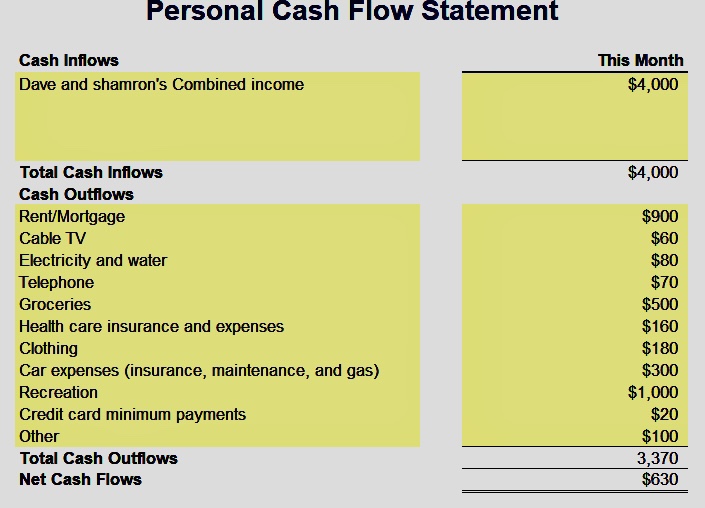
Ok ok ok, this all sounds simple and easy. If it were that easy then why doesn’t everyone do it? This question is one I think about often. And I don’t really know. If I told you all you had to do was rub aloe on your arm every night before bed and you’d be healthy forever, everyone would do it. Tell people to keep a record of every penny earned and spent and they look at you like you have two heads. The following is an example..

Sometimes I think people doubt I actually do that every month. I suppose it is a lot to do at first. That is until you get used to it. I’ve been doing that for over a decade actually. Month after month. My job is to make sure I have more money come in than go out. And I will do whatever I have to, to make sure of that. It’s that simple.

When I tell people this they start blurting out estimates and ranges. “I spend about 650 on food and 300 on gifts” etc. This is it NOT going to work.

You need to have full accountability. Like you were running a business. Imagine. If every month and therefore every year you knew exactly where all your money went. To the penny. Even more important, you knew how much you spent relative to how much you made. How empowered and in control you would be! The secret to getting ahead is to build the gap between the income and the expenses. And then take that gap and set yourself up financially. But there has to be a gap. Month in and month out. The only way to be sure of this is to keep track. Otherwise you will naturally start to say crazy things like we can afford this that and a third. Spending all the way up to your income. And then the gap is gone. You are now treading water financially.

Do your current and future self a solid and build your gap between income and expenses. Do this by keeping track of your expenses like a religion. Your life will take so many positive steps forward and it will be so much easier. You will be in full control of your finances. Done right and you will have thousands in extra cash every month to pay down debt and later invest. You will be stunned how powerful this is over time. How simple your financial life can be.

Let me give you an example from my own personal situation that will demonstrate how powerful knowing your cash flow is. I have three homes. Two single family rental properties and my primary home. I just replaced all three roofs with 5V Metal. Total cost was $49,040. I don’t have that kind of cash sitting around. Strategically. Better to have it invested. But, I have two lines of credit at low rates. A Home Equity Line of Credit & a credit line against my brokerage account. Both are variable rates. But much lower than a credit card because they are collateralized. In fact, they are cheaper than a mortgage currently. Now using this kind of debt may seem daunting. Admittedly I had anxiety at first as well. But then I realized how much data I have to analyze to determine my expected pay off time. And this alleviated my worry.

I averaged out my free cash flow over the past two years. $4,372 a month is what I averaged, after of course maxing out my 401k. So while still contributing the most I can to my retirement, I still had plenty of cash each year to work with. Suddenly this became an 11 month problem. ($49,040/4,372=11). Ahhhhh the power of knowing what you spend. Been sleeping like a baby every since. And! Now my biggest capital expense at each property is complete. Should be smooth sailing from here.

Now imagine if I was barely squeaking by each month, spending right up to what I made with no accountability and no free cash. I’d be very discouraged and this would be a mounting problem.

Unfortunately, If you don’t have full accountability, you will spend most of what you bring in or possibly even more than you bring in. Cash will dwindle down, forcing you to use credit, refinance your house, take from retirement accounts or even borrow from others when expensive things happen. Imagine a life where you have $8,500 a month coming in on average and $2,500 being spent. This is equivalent to financial angel handing you $6,000 solely to put aside to build your financial empire. Your life expenses have been paid from the $2,500.

Only thing is, it HAS to be used to build your financial future. For example, to pay off debts, build college funds for your children, pay off your house or cars etc. and hopefully build assets once the debt is cleared up. If you start to squander it on useless consumer items the angel takes this “future” building money away. The debt comes back slowly and you backtrack. Fortunately, you don’t need an angel, at least not in this context. You just need to understand how much you spend relative to how much you make.

Not Another Blog..

First off, why am I blogging? Because I lhave thoughts I’d like to write down and keep track of. My thinkings if you will. I read a lot. I process a lot of information, and over the past 15 years of learning about investing and business almost obsessively, I’ve formed some rather strong opinions and learned some valuable skills that have served me well. Some of which are none to popular. So, this blog will act as kind of a financial journal, a collection of what I’m personally doing, what I’ve learned, the mistakes I’ve made and all that fun shit in between. From time to time I will share actual numbers of my finances, to offer a blend of self deprecation and realness. I personally enjoy actual figures in the blogs I follow. From this, I hope someone can learn something, and maybe I can learn some stuff too. As I learn new things, some of which will be incredibly nerdy, I will try to blog about it for future reference and or for your reading pleasure.

You may be wondering what qualifies me to write publicly about business, personal finance and investing. Full disclosure, I’m not qualified at all. I live a worthless existence spent reading the newspaper, books on investing, biographies and from time to time an annual report I find interesting. But I have somehow through strokes of luck, discipline and grit amassed well over a seven figure net worth, even excluding my primary residence which is paid off. This net worth is 55 times my annual spending, since I’ve done a solid job on the debt side of my balance sheet. Presently, this fully qualifies me for early retirement and then some. When I reflect on this success, I’ve come to realize that there are some habits, knowledge and skills that are both useful and replicable. So why the hell not share. I also have plenty of screw ups you can learn from too. Why should you have to make the same mistakes I did? So there you have it. I’m an unqualified business nerd who reads the newspaper. I would consult a professional before taking anything I talk about on this blog seriously.

One last point on the name of this blog. Build The Gap? What does that mean? Well, the gap equals the difference between income and expenses. Better known as free cash flow. That gap is where the magic happens. It is where your focus should be. Whether you are analyzing an investment or evaluating your personal finances, knowing that gap is incredibly important. Dare I say it, the most important. It is how my net worth was built. I have spent the better part or my adult life slowly building that gap. My main job as I see it is taking the free cash flow accumulated and reinvesting it into assets that then produce more cash flow.