The Ultimate Wealth Score

Let’s face it. We all like to see how we stack up to those around us. It’s natural. It’s all part of the evolution of our species and a great way to learn and grow. There are some great things that can come from this. And also some bad. Depending on how the information is processed and used. If it leads to envy and jealousy it’s probably counter productive. If it leads to adjustments and change for the better, it can be highly productive.

When the topic is personal finance, which are such a taboo subject like religion and politics, most people are left in the dark when it comes to any level of comparative analysis. I view this as a very negative thing. If people knew how far behind the averages they were, it could encourage them to make necessary adjustments to ensure their later years are not destined for poverty and a diminished quality of life. Unfortunately we have no idea where we stand usually. Nor do we even know a valuable metric to use as an instrument for said comparison.

I hear people say things all the time that lack context and or relevance. For example, a statement like “oh he’s rich he or she has 10 million of assets.” This lacks so many needed inputs to assess someone’s wealth. Like, gee um what are the liabilities maybe? Or how much do they spend annually? Quite feasibly you can have 10 million of assets with 9 million of debt, be spending more than you are bringing in annually and be on your way to bankruptcy. Real talk.

It would be so useful if we had sort of a universal wealth metric. So we all know where we stand. This could be so beneficial to those with low score to make the necessary improvements and for those with great score to be able to take their collective foot off the proverbial financial gas pedal and learn to enjoy what they have accumulated. So the score can benefit everyone. It’s all about context and perspective. Two eye opening and powerful words.

So, I have formulated a metric that I use personally called my wealth score. I use it to compare myself to others of course. But mostly I use it to ensure I don’t fool myself into thinking I’m doing better than I actually am. After all if you can’t be honest with yourself then well, you’re probably screwed. People fool themselves all the time. Without knowing or realizing it they tell themselves financial lies. They transfer money to a savings account month yet run cash flow deficits bc they don’t keep track of their total spending or they contribute to a 401k but spend more then they bring in, so their savings rate is actually negative. They are growing their assets but growing their debt even faster. These are all examples of the lies we tell ourselves when it comes to money. It should come as no surprise that people feel they are treading water financially. We need to keep score.

What we need is the best tool to see where we are. One that takes into account all the relevant metrics. Assets, liabilities and cash flow. But also a metric that strips out the unnecessary fluff metrics such as your primary residence and frequent flyer miles for example. We have to get to the brass tax of what you need to know. Without further ado, here it is:

net investable assets/total spending

If this number is above 25, I’d say you are entering the financially well off level of personal finance. So what does all this mean? As I usually do, I will use my own financials to illustrate the usefulness of this score a little later. I like to look at what could be used to invest to create passive income. Obviously, my primary house would do nothing, my frequent flyer miles or American Express points would do nothing either. Vehicles would also be excluded. Although if you had one or more “secondary” vehicles that could be sold and invested, this should be potentially counted. These are all great assets, and I count them on a balance sheet as such. But if I want to create passive income, they are useless. Hopefully the difference is clear. It’s an important distinction.

For me, for the net invested assets portion of this formula I count only the equity for investment real estate, net stocks which factor in lines of credit against them, and cash. All these assets are net invested capital. So for example if I had 350k of stocks and a line of credit borrowed against them of 50k, I’d factor 300k.

Next is the spending. This is the tricky part of this formula. As I’ve mentioned in prior posts, knowing your spending is incredibly useful, yet almost nobody does it. It’s tedious to keep track of. Years ago you’d have to have spreadsheets and keep receipts. These days it’s easier. You can simply link your accounts to software and it tracks it for you. I do both. I’m extra. If one fails I have backups. The important thing is to capture all your spending. Every penny. Not just your bills. How much does your life cost essentially. Notice that I don’t factor in any personal loans or credit card balances into this formula. These would be captured in a balance sheet of course. For the purpose of this wealth score however, it would be captured in your expenses in the sense of what you pay for your required statement bill. But only what’s required. Not any extra you choose to put towards servicing the debt.

This score is in my opinion the best at capturing your situation as it is. Only what’s necessary. Stripping out the rest. My score is 49

1,484,583 / 30,114.13=49.299

Not bad. my goal is to improve this figure going forward. Which means I have to essentially grow net assets much faster than I’m growing my spending or lifestyle. And that my friends is as they say, the brass tax of it. What is your wealth score? Happy holidays and happy calculating.
Automated Advertisements

I don’t know about you, but with most things in my life I am constantly scrutinizing every detail in an attempt to optimize and get more efficient.

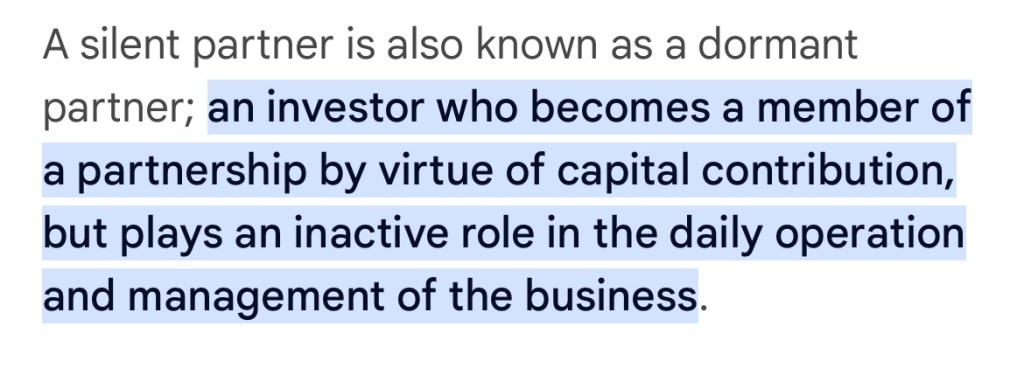
As part of this ever evolving process, I have slowly and over time completely automated my finances. This transition happened over many years. A few automated bills here, a few there, to the point where I’ve almost become like a silent partner to my own finances. For those of you who don’t know what a silent partner means:

As humans we all enjoy reassurances that whatever we are doing is ok. For me, these reassurances keep me grounded to my true North. They remind me of the reasons for what I’m choosing to do. I call these ongoing reassurances my automated advertisements. But first let me explain what advertising is meant to do.

If you’ve ever seen the hit show Madmen, the main character Donald Draper is pitching an advertising campaign to the owners of a cigarette company called Lucky Strike. The show is based in the 60’s during a time when government regulation due to the dangers of cigarettes were having an adverse affect on cigarette companies. Draper, which all his brilliance was getting to the essence of what advertising is when he said:

Advertising is based on one thing, happiness. And you know what happiness is? It’s the smell of a new car. It’s a billboard on the side of the road that screams reassurance that whatever you are doing is ok. You, are ok.

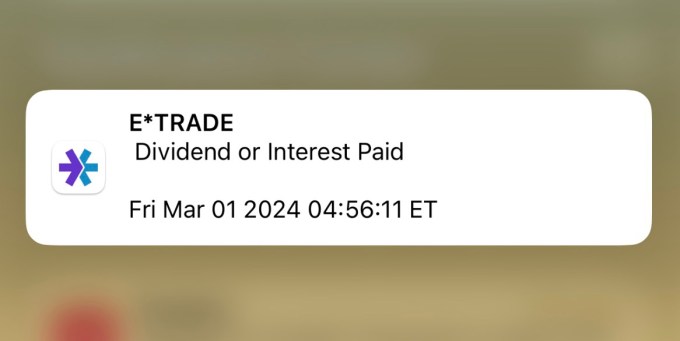
With that in mind, I like to create my own automated advertisements. I do this by turning on every possible notification from the 25+ financial accounts I have. These act as little automated advertisements meant to reassure me that what I’m doing is working. It reinforces that the process works.

  • Rent checks received
  • Dividends received and reinvested
  • Net worth increased
  • Cash flow for the month was $…..
  • Bill paid in full

Some of my favorites are when Amex sends me push notifications stating my credit card statement was paid in full, as I sit at lunch overlooking the intercostal like I did yesterday with clear blue skies. There is zero room for error because it’s all done automatically. The system works if I do nothing at all.

These reassurances although small, are the reward for discipline, responsibility and being organized financially. The mundane month to month details are handled. All I do is much like a silent partner to a business would do. I check in and see how things are going. Because of this, I know that there was more cash coming in than going out, to the penny. (And by the way, I’ve just recently automated this process as well.) So therefore, there is adequate money to pay credit card statements in full and all my other bills. I don’t need to worry. This is an upper level of financial security. Being hands off. And it’s wonderful.

My money is like a well oiled machine. My job is to make sure I’m headed “basically North.” Along the way I can see my automated advertisement billboards screaming at me that what I’m doing is ok. That I’m, ok.

The Grand 2023 Experiment

Unbeknownst to anyone, a shift occurred in the life of Beau Pearson for the year 2023. Dare I say it, I slowed down. I slowed wayyyy down! I burned the candle from both ends so to speak, making less money and spending more. Just saying that out loud as I write this makes me cringe. And yet..this was on purpose and just because.

Why you ask? Why purposefully spend more and make less? Well, I wanted to see what that would look like financially at the end of the year and how I would feel about it is the short answer. Would I wish I didn’t do it? Or crave more of this new found easier path? Perhaps I would want to tighten up and grind extra hard to make up for the lost productivity. So many things to consider. But I did feel it was time to pivot. After 12 years of grinding due north to strict GPS coordinates, it was time to put the boat on cruise control and simply check in from time to time to make sure I was still heading what I will call “basically North.” I wouldn’t call it burn out, but at some point there has to be a course correction. So what did I do differently and how did the chips fall at year end?

For one thing I bought a “just because” car. I didn’t need a new car. I just wanted the feel of a new one and the experience of driving around in style. Especially when I want to go for a nice night out or cruise around for pleasure. I kept my old one to use as a daily driver. Which has been working out great. Averaging well over 40 mpg in the city, it’s a perfect commuter car. Plus I’ve had it since 33k miles and I take really good care of it. So now I have two cars. I don’t like the added insurance but it’s not that much more. Anyway, cost of this new car was $35,154.62 out the door. In May of 2023

Then, around the middle of December 2022 some long term tenants I had notified me they wanted to break their lease early. They were extending their family and needed some more space. Due to this, I was going to have a dreaded vacancy smack dab in the middle of my 12 day vacation I had planned in February! Now, the old me would have surely used that time to save money by fixing and painting things myself.

The new me however, said the heck with it. I made a detailed list of 27 items with photos, called my handyman/contractor and did a walk through with him explaining what needed to be done.

Finished and ready to list

As for me, I came into work one morning shortly after and decided to take a cruise during this vacancy instead. I called Norwegian and said “I want your biggest and or newest ship for a week.” You have to understand, this would have been unthinkable not that long ago. Not only was I going to have an expensive contractor bill when I returned, I was going to spend a pretty penny for this cruise. But I was in pivot mode so, let’s go!!

Spent a week aboard the Norwegian Encore

Finally, the last change I made was just indulging and spending more freely. I didn’t just throw money away. But if I wanted something I didn’t hesitate let’s just say that. While this may be normal to my readers, certainly not normal to me. Up until this point there would have been a rigorous debate in my head if I truly needed it or if could I do without it. Or put another way, was the purchase a want or a need? Those questions still happened but I relaxed my justifications and happily purchased some things that without a doubt made my time on this earth more enjoyable, more efficient and/or just plain better. I also took the liberty of updating my wardrobe and shoes.

Taking stock of 2023, how did I do? Here is a summary of what I refer to as retained earnings for 2023:

  • Free Cash Flow $33,437.10
  • 401k $24,500.00
  • Net Rentals $8,673.53
  • Total $66,610.63

So it was a pretty damn solid year. I ended up spending $7,432 more than the average over the previous 5 years. Some of this was due to inflation, but some my own doing for sure. Certainly the cruise and added auto insurance for a second vehicle played a big roll. Nonetheless, my total retained earnings for 2023 were $66,610.63. I took $6,500 of the $33,437.10 in free cash and transferred it to a Roth IRA. The remainder went to paying off the car note of which $23,418.29 was paid down. Also, I decided to build up my cash on hand. As a result, I decided to open an American Express High Yield Savings to store this excess cash, so whatever I didn’t put towards the car note I moved to the HYSA, which has an APY of 4.3%. It’s not the best interest out there but well above average. I have multiple Amex cards so it was just easy.

All the work I’ve done over the last 12 years really paid off last year. Stocks and real estate both had impressive years. My net worth climbed $263k on the back of both my stock portfolio and the equity increase in my investment real estate. My stock portfolio climbed a whopping 173k for the year. I did contribute 31k of new money to the stock portfolios between the 401k and Roth IRA. Also I had $15,142.63 of dividends reinvested. So all in all, $46,142.63 was invested in stocks taking into account new money and dividend reinvestment.

So what’s my take on the new Beau? I would say this experience was worth it. I’ll keep being a bit more loosey goosey with my monies and continue heading “basically North,” being sure to at the very least keep it between the navigational beakers.

It’s All About The Expenses..

The personal finance space is vast and overwhelming. Everyone would love to be financially secure, but where do you start? What is the secret to getting ahead? Are there a few simple action steps you can do now that pay huge dividends throughout your life? See what I did there? you’re welcome.

Much like investing my money and ultimately seeking a satisfactory return, I like action steps that require little upfront time yet provide a windfall of lifelong benefit returns. Think of this as a personal finance hack. It’s so simple yet almost nobody outside of personal finance nerds such as myself actually do it. But this is to good not to share. What is this life altering free hack? Know what you spend money on. Boom. Done. Ok ok, I’ll elaborate.

When I say “know what you spend money on” I don’t mean tell me your bills such as your mortgage, cell phone and your utility cost. Everyone knows their bills almost to the penny, and that’s good too. But the real value comes from knowing your total spend. For example, food, gas, random trips to target, gifts, travel or even random vending machine purchases etc. Every penny is key. Looking at your bills and all your discretionary spending together gives you what your total monthly expenses are. This is key. So why is this such a big deal? With this data you can answer so many questions about the past and future. Suddenly things are crystal clear. This clarity brings a sense of calm and focus. Let’s talk about the benefits.

Perspective If you’ve been struggling financially, which let’s face it, a lot of people are the days, having accurate data on where your money is going helps to have perspective. You may be thinking, who the hell cares about perspective when you are broke?! Stay with me, it will be worth it. Take a second to write down what you think you spend a month on your total food costs. Not just groceries but take out, restaurants and anything else that you would classify as “food.” Then try keeping receipts for a month for all these food items. Try to be as accurate as possible. I’m willing to bet your actual spending on this category will shock you. Now let’s take it one step further and keep every single receipt for a full month on every purchase you make. Again, this number may shock you. Little mindless purchases add up to big spending over a 31 day period believe me. Once every penny is accounted for, next let’s compare it to your total take home pay for the same month. If done correctly you should have a very accurate bird’s eye view of where your money is going and what is left after all the spending has happened.

Now that you can visually see where your money went, start scrutinizing what was wasteful or excessive. If your total spend was very close to your take home pay, then this is a problem. I call this treading water. Yea you are staying afloat, but you aren’t going anywhere. And if you catch a cramp, you are toast. The title of this blog is Build The Gap. The gap meaning the difference between your income and total expenses. Some would call this free cash flow. It’s considered free because you can do whatever you like with it. If you keep track of spending accurately, then you should know your gap each month.

Now a little perspective. Spending $600 a month for a family on restaurants for an entire month may not seem excessive. Hell in todays world this may be 2-3 dinners only. But If you consistently have no gap or even negative gap, meaning more expenses than income, suddenly these dinners seem more outrageous. On the flip side if you have consistent gap, in line with your financial and lifestyle goals, then $600 is money well spent. How would you know this insight If you didn’t keep track? The answer is you wouldn’t. Operating your budget on hopes and prayers is like treading water in the middle of the ocean. Sure with the salinity in the water you may be able to stay afloat for quite a long time. You may even eventually make it to safety, but would you want to? Probably not.

I always enjoy seeing actual figures when I read peoples blogs. It’s more personal and relatable. And let’s face it it’s a natural thing for us to compare ourselves to others. This can actually be healthy in many ways. But also destructive if done for the wrong purpose. For the sake of this blog post, I’m sharing because I want to demonstrate what I would call rational exuberance and what that looks like. Use it as a benchmark for your own fanciful spending. Two rather large expenses I made in 2023 were purchasing a new car and going on a week cruise with Norwegian. The total car purchase out the door was $35,134.62 for a 2022 Camry XLE Hybrid with 15,344 miles. This was about $7,000 less than the brand new out the door figure I was getting from dealers in my area. And my cruise was $1,462.00. It should be noted that I financed 100% of the car. Reason being is despite having a 7 figure net worth I don’t keep much cash. But I do recognize with interest rates being what they are presently, the rationale for holding higher levels of cash is elevated. So I will make that adjustment going forward. That being said, I used a Line of Credit against a rental property with a teaser rate of 4.9% for 6 months to purchase the vehicle that is interest only in terms of my payment. So I have a payment of $185.92 that gets adjusted down with each payment made. So when I do my free cash flow statement each month I’m only factoring in what is required of me to pay. So the $185.92 for instance. And of course I fully expensed the entire cost of my cruise.

So where did that leave me financially?Through October of 2023, I have had a total free cash flow figure of $37,609.31 or for you monthly people, an average of $3,419.04. Keep in mind this is cash flow. I fully max out my 401k at work which is $22,500.00. But this comes out pre tax. So my free cash flow figures would be net of that. I also included in free cash flow the net income for my rental properties.

So essentially I was handed $37,609.31 to build my net worth the most intelligent way I could. What did I choose to do? Well, first I maxed out my Roth IRA. So deduct $6,500. Then I had a little debt on a HELOC from some roof replacements last year that I decided to pay off, so deduct another $10,467.00. The remainder of my free cash went to paying off the new car.

All in all, I allocated $31,000 (24,500 401k + 6,500 IRA) of retained earnings to stocks and $31,109.06 (roofs and new car) to paying off some debt. Not a bad year. And I still have a month of cash flow to go! Now, just imagine if my gap was negligible or god forbid negative. Then that car purchase would have been idiotic. Considering my situation it was not a big deal at all. This is perspective. And keeping spending and investing in the proper perspective is imperative to being financially successful.

Work Backwards let your mind wander to the future. Where would you like to be financially? Paid off house? 1 million in retirement accounts and debt free? Write it all down. Then calculate how much you need to put away each month. Work backwards. Based on your present levels of income and expenses are your goals achievable or so adjustments need to be made? If you don’t know your expenses to the penny it’s nearly impossible to plan for things like this. You are operating under the hope and prayer method.

Make More or Spend Less a cool thing about getting ahead financially is you can take many approaches. Remember, the secret sauce is your gap. The difference between what you bring in and what you spend. If you are a high earner bringing in 25k a month, and you keep your spending like you were a broke college student and you are saving and investing 22k a month or 264k a year, then you will get rich very fast assuming you do intelligent things with your gap. For me personally. I’m an average guy with average earning power and I would argue below average skills. So taking the high earner approach seemed like a reach. And I didn’t want to sit around wasting time, thinking well, if I don’t make a lot of money I can’t get ahead. Hell with that. Give yourself a raise by spending less. After all is said and done, your free cash flow is indifferent if it came from making more or spending less. It’s all the same. It’s free cash. Period.

Suppose you say to reach my goals I need to have $3,500 a month of gap. that’s 42k a year to pay off your debt and then invest. Over a period of time this will get you to your goals. Well you can sit around and wait for some huge income opportunity. And if it doesn’t come you use that as an excuse. Or, you can say ok, I’ll be a frugal badass, have a more efficient lifestyle and cut my expenses by $3,500. Your gap won’t know whether it came from more money or spending less. And I’m guessing your future self won’t care either. And an added benefit is you will have learned to get the same level of happiness on far less money. And if I’m honest, you will likely be happier as a result than you were before. Because now your gap has a purpose. It’s working for you. And that progress and growth takes on a happiness of its own.

The Book That Changed My Life

This has been a very busy year so far. I took a week cruise, had a pretty lengthy rental vacancy, bought a car and did some home projects at my primary house. Now that things are finally settling down, I’ve begun to take stock of where I am in life and the pivotal moments that altered my course in getting here. In this reflective mood, I was searching for the biggest contributor to the path I am currently on. A path I hope leads to fulfillment and early retirement. Surely I wasn’t on this path in high school or my college years. So what changed?

I’ll tell you what changed..I read a really big book. I’ll never forget when I came across the book that changed my life forever. It was right around the time when Borders the book store was going out of business and they had their inventory in the parking lot under huge tents. But first a little back story to set the table.

Admittedly, I mainly went to the book store to look at the music selection they offered or to get coffee, never much of a reader as a kid. Although I liked the idea of reading, I could never find anything to keep my interest for more than a few pages. I often had to re read the same paragraph over and over to comprehend information. Comprehension in school was always a weak subject for me. I struggled. It all seemed so boring. Comprehending what I was reading took real work. Brain work. I used to think I had a reading disability to be honest. I can recall finishing only one book as a kid, although the name of it slips my memory. Still, the idea to step into a different world, or to see the world through someone else’s paradigm was intriguing. An Introvert at heart, I pined for the ability to read, learn and discover new things. But what would interest me enough to focus my mind? This always eluded me growing up.

So I moved back to the town I grew up in June of 2007 shortly after graduating college in May of that year. I was lost to say the least. At that time I remember being so confused on who I was. What was I passionate about? What was I good at, if anything at all? I always admired those friends I grew up with who knew exactly what they were passionate about and wanted to do with their lives. I just had no idea. It was worrisome and gave me great anxiety at this time of my life to be honest. I was an average student at best, who never really applied myself and was hardly interested at all in basically any subject matter that was taught in school. This also worried me. I was craving something to be passionate about. Oddly, although I had no real passions, I always knew if I found something I cared about I would be relentless and good at it. I can get obsessed with something if I care enough.

After a few months living back home I got a job as a Nuclear Security Officer. What was intended as a transition job turned out to be a pretty good job with excellent pay and benefits. And although I had no real passions at the time, I did love the idea of being financially independent.

I can’t put my finger on exactly when the interest was piqued. I will say that my hire date was October 1st 2007, the peak of the housing financial crisis. And the town I live in was hit exceptionally hard with home prices dropping far more than national averages. Taken together, with a job that was paying me real money at a young age, I smelled a huge opportunity. Rock bottom interest rates, home prices off 60%, stocks dirt cheap, huge pay gains, no debt, living at home, no kids and somewhat ambitious. Collectively these were a set of variables that if harnessed correctly could set me up for life. I knew very little at the time, but I did see this incredible opportunity and viewed it as a once in a generation type event. This opportunity ignited a strong interest. Still, at this point I wouldn’t quite call it a passion. Nonetheless, I began devouring anything I could get my hands on that had to do with getting rich. I read everything. Although I truly believe every book I read was an important developmental piece of my story, not one book changed me like the one I was soon to find.

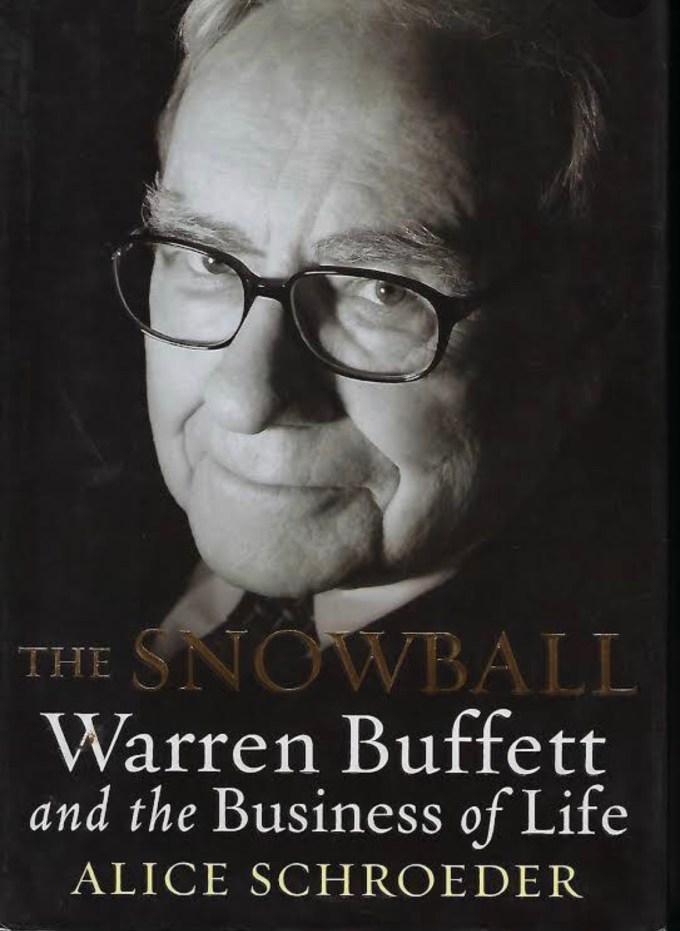
Sometime around 2010 during the bankruptcy process for Borders I found The Book. In the parking lot of the mall was all of Borders’ inventory under these huge tents. Rows and rows of books. I came across one book of this old wise looking guy. The look on his face was one that said, I know more than you. The book was The Snowball Warren Buffett and the Business of Life. Embarrassingly, I had never heard of Warren Buffett. And why this book intrigued me to this day I have no idea. It was a massive book with 787 pages of fine print and minimal pictures. The idea of ever reading it seemed daunting. But I had been reading about investing for a few years and the book was cheap so I figured what the hell. I remember reading the summary on the inside and phrases like the “Oracle of Omaha” and the “Sage of Nebraska” jumped out at me. As if he were some type of living legend. And for some reason the description of him as just a plain and simple ordinary billionaire is what sold me. I had to know who this guy was.

And so it began. I devoured that book. And it sparked a passion for business and investing that still fascinates me today.

Buffett’s story is relatable in many ways. You read about other billionaires and most if not all started a hugely successful company. In other words they created something. And while inspiring and interesting to read, it does often leave one feeling inferior. However, Buffett didn’t create anything. He is the ultimate capitalist. I don’t have the time to write out his biography in this post, but I encourage you to read his story or watch some of the biographies that have been done on him.

To summarize, he graduated from high school with roughly ten thousand bucks, invested in companies ran by others and ultimately became the richest person in the world. He takes the long view, understands value and is a brilliant investor. Some of his investments have been in plain sight, yet somehow he saw value where others missed it. Many of his investments he has owned for decades. In other words, he shuns the short term mentality that grips Wall Street. Oh, and he still lives in the same upper middle class house he bought in 1956 for $31,500. Intrigued?

You may be asking, ok but why did this book change my life? When I was younger, I can’t say I had passions, but I was incredibly curious. I would ask random questions like “I wonder how much money this store makes?” Needless to say, although I was curious about many things, I had a particular curiosity about business. I always fantasized about being a business owner and how pleasurable it must be to be in control and work with the numbers, alone at night in your office. The idea of working with “my numbers” intrigued me. Something I can have control of, optimize and compete in. I don’t think I thought of it as a passion at the time. But this book unlocked that passion.

Buffett’s approach is to buy pieces of companies in the stock market. And to approach those pieces as if you were buying the whole company. Berkshire Hathaway, which Buffett is a controlling shareholder, also owns wholly owned companies. And in these wholly owned companies he leaves the management in place. Essentially he writes a check to buy either a piece or the whole company, and says I want to buy the management too, just send me whatever excess capital you don’t need in your business. This is very different than the typical corporate raiders, or day trading masses that populate Wall Street. Buffett’s approach therefore is not of a speculative nature but that of an owner. What this taught me is I don’t have to have big bucks and or creativity to start a company of my own, I can save money and buy little pieces of companies via the Stock Market. And my approach can be the same. I can check in every quarter and see how my company is doing by reading the quarterly reports. In essence I would get to live out that childhood fantasy. Suddenly a whole new world opened up. But I had no idea early on how to read accounting statements or what makes a good business. Why did some companies fail? Or What made an exceptional company? But the passion was born. And to this day this mindset shift has paid dividends, pun intended.