It’s All About The Expenses..

The personal finance space is vast and overwhelming. Everyone would love to be financially secure, but where do you start? What is the secret to getting ahead? Are there a few simple action steps you can do now that pay huge dividends throughout your life? See what I did there? you’re welcome.

Much like investing my money and ultimately seeking a satisfactory return, I like action steps that require little upfront time yet provide a windfall of lifelong benefit returns. Think of this as a personal finance hack. It’s so simple yet almost nobody outside of personal finance nerds such as myself actually do it. But this is to good not to share. What is this life altering free hack? Know what you spend money on. Boom. Done. Ok ok, I’ll elaborate.

When I say “know what you spend money on” I don’t mean tell me your bills such as your mortgage, cell phone and your utility cost. Everyone knows their bills almost to the penny, and that’s good too. But the real value comes from knowing your total spend. For example, food, gas, random trips to target, gifts, travel or even random vending machine purchases etc. Every penny is key. Looking at your bills and all your discretionary spending together gives you what your total monthly expenses are. This is key. So why is this such a big deal? With this data you can answer so many questions about the past and future. Suddenly things are crystal clear. This clarity brings a sense of calm and focus. Let’s talk about the benefits.

Perspective If you’ve been struggling financially, which let’s face it, a lot of people are the days, having accurate data on where your money is going helps to have perspective. You may be thinking, who the hell cares about perspective when you are broke?! Stay with me, it will be worth it. Take a second to write down what you think you spend a month on your total food costs. Not just groceries but take out, restaurants and anything else that you would classify as “food.” Then try keeping receipts for a month for all these food items. Try to be as accurate as possible. I’m willing to bet your actual spending on this category will shock you. Now let’s take it one step further and keep every single receipt for a full month on every purchase you make. Again, this number may shock you. Little mindless purchases add up to big spending over a 31 day period believe me. Once every penny is accounted for, next let’s compare it to your total take home pay for the same month. If done correctly you should have a very accurate bird’s eye view of where your money is going and what is left after all the spending has happened.

Now that you can visually see where your money went, start scrutinizing what was wasteful or excessive. If your total spend was very close to your take home pay, then this is a problem. I call this treading water. Yea you are staying afloat, but you aren’t going anywhere. And if you catch a cramp, you are toast. The title of this blog is Build The Gap. The gap meaning the difference between your income and total expenses. Some would call this free cash flow. It’s considered free because you can do whatever you like with it. If you keep track of spending accurately, then you should know your gap each month.

Now a little perspective. Spending $600 a month for a family on restaurants for an entire month may not seem excessive. Hell in todays world this may be 2-3 dinners only. But If you consistently have no gap or even negative gap, meaning more expenses than income, suddenly these dinners seem more outrageous. On the flip side if you have consistent gap, in line with your financial and lifestyle goals, then $600 is money well spent. How would you know this insight If you didn’t keep track? The answer is you wouldn’t. Operating your budget on hopes and prayers is like treading water in the middle of the ocean. Sure with the salinity in the water you may be able to stay afloat for quite a long time. You may even eventually make it to safety, but would you want to? Probably not.

I always enjoy seeing actual figures when I read peoples blogs. It’s more personal and relatable. And let’s face it it’s a natural thing for us to compare ourselves to others. This can actually be healthy in many ways. But also destructive if done for the wrong purpose. For the sake of this blog post, I’m sharing because I want to demonstrate what I would call rational exuberance and what that looks like. Use it as a benchmark for your own fanciful spending. Two rather large expenses I made in 2023 were purchasing a new car and going on a week cruise with Norwegian. The total car purchase out the door was $35,134.62 for a 2022 Camry XLE Hybrid with 15,344 miles. This was about $7,000 less than the brand new out the door figure I was getting from dealers in my area. And my cruise was $1,462.00. It should be noted that I financed 100% of the car. Reason being is despite having a 7 figure net worth I don’t keep much cash. But I do recognize with interest rates being what they are presently, the rationale for holding higher levels of cash is elevated. So I will make that adjustment going forward. That being said, I used a Line of Credit against a rental property with a teaser rate of 4.9% for 6 months to purchase the vehicle that is interest only in terms of my payment. So I have a payment of $185.92 that gets adjusted down with each payment made. So when I do my free cash flow statement each month I’m only factoring in what is required of me to pay. So the $185.92 for instance. And of course I fully expensed the entire cost of my cruise.

So where did that leave me financially?Through October of 2023, I have had a total free cash flow figure of $37,609.31 or for you monthly people, an average of $3,419.04. Keep in mind this is cash flow. I fully max out my 401k at work which is $22,500.00. But this comes out pre tax. So my free cash flow figures would be net of that. I also included in free cash flow the net income for my rental properties.

So essentially I was handed $37,609.31 to build my net worth the most intelligent way I could. What did I choose to do? Well, first I maxed out my Roth IRA. So deduct $6,500. Then I had a little debt on a HELOC from some roof replacements last year that I decided to pay off, so deduct another $10,467.00. The remainder of my free cash went to paying off the new car.

All in all, I allocated $31,000 (24,500 401k + 6,500 IRA) of retained earnings to stocks and $31,109.06 (roofs and new car) to paying off some debt. Not a bad year. And I still have a month of cash flow to go! Now, just imagine if my gap was negligible or god forbid negative. Then that car purchase would have been idiotic. Considering my situation it was not a big deal at all. This is perspective. And keeping spending and investing in the proper perspective is imperative to being financially successful.

Work Backwards let your mind wander to the future. Where would you like to be financially? Paid off house? 1 million in retirement accounts and debt free? Write it all down. Then calculate how much you need to put away each month. Work backwards. Based on your present levels of income and expenses are your goals achievable or so adjustments need to be made? If you don’t know your expenses to the penny it’s nearly impossible to plan for things like this. You are operating under the hope and prayer method.

Make More or Spend Less a cool thing about getting ahead financially is you can take many approaches. Remember, the secret sauce is your gap. The difference between what you bring in and what you spend. If you are a high earner bringing in 25k a month, and you keep your spending like you were a broke college student and you are saving and investing 22k a month or 264k a year, then you will get rich very fast assuming you do intelligent things with your gap. For me personally. I’m an average guy with average earning power and I would argue below average skills. So taking the high earner approach seemed like a reach. And I didn’t want to sit around wasting time, thinking well, if I don’t make a lot of money I can’t get ahead. Hell with that. Give yourself a raise by spending less. After all is said and done, your free cash flow is indifferent if it came from making more or spending less. It’s all the same. It’s free cash. Period.

Suppose you say to reach my goals I need to have $3,500 a month of gap. that’s 42k a year to pay off your debt and then invest. Over a period of time this will get you to your goals. Well you can sit around and wait for some huge income opportunity. And if it doesn’t come you use that as an excuse. Or, you can say ok, I’ll be a frugal badass, have a more efficient lifestyle and cut my expenses by $3,500. Your gap won’t know whether it came from more money or spending less. And I’m guessing your future self won’t care either. And an added benefit is you will have learned to get the same level of happiness on far less money. And if I’m honest, you will likely be happier as a result than you were before. Because now your gap has a purpose. It’s working for you. And that progress and growth takes on a happiness of its own.
The Book That Changed My Life

This has been a very busy year so far. I took a week cruise, had a pretty lengthy rental vacancy, bought a car and did some home projects at my primary house. Now that things are finally settling down, I’ve begun to take stock of where I am in life and the pivotal moments that altered my course in getting here. In this reflective mood, I was searching for the biggest contributor to the path I am currently on. A path I hope leads to fulfillment and early retirement. Surely I wasn’t on this path in high school or my college years. So what changed?

I’ll tell you what changed..I read a really big book. I’ll never forget when I came across the book that changed my life forever. It was right around the time when Borders the book store was going out of business and they had their inventory in the parking lot under huge tents. But first a little back story to set the table.

Admittedly, I mainly went to the book store to look at the music selection they offered or to get coffee, never much of a reader as a kid. Although I liked the idea of reading, I could never find anything to keep my interest for more than a few pages. I often had to re read the same paragraph over and over to comprehend information. Comprehension in school was always a weak subject for me. I struggled. It all seemed so boring. Comprehending what I was reading took real work. Brain work. I used to think I had a reading disability to be honest. I can recall finishing only one book as a kid, although the name of it slips my memory. Still, the idea to step into a different world, or to see the world through someone else’s paradigm was intriguing. An Introvert at heart, I pined for the ability to read, learn and discover new things. But what would interest me enough to focus my mind? This always eluded me growing up.

So I moved back to the town I grew up in June of 2007 shortly after graduating college in May of that year. I was lost to say the least. At that time I remember being so confused on who I was. What was I passionate about? What was I good at, if anything at all? I always admired those friends I grew up with who knew exactly what they were passionate about and wanted to do with their lives. I just had no idea. It was worrisome and gave me great anxiety at this time of my life to be honest. I was an average student at best, who never really applied myself and was hardly interested at all in basically any subject matter that was taught in school. This also worried me. I was craving something to be passionate about. Oddly, although I had no real passions, I always knew if I found something I cared about I would be relentless and good at it. I can get obsessed with something if I care enough.

After a few months living back home I got a job as a Nuclear Security Officer. What was intended as a transition job turned out to be a pretty good job with excellent pay and benefits. And although I had no real passions at the time, I did love the idea of being financially independent.

I can’t put my finger on exactly when the interest was piqued. I will say that my hire date was October 1st 2007, the peak of the housing financial crisis. And the town I live in was hit exceptionally hard with home prices dropping far more than national averages. Taken together, with a job that was paying me real money at a young age, I smelled a huge opportunity. Rock bottom interest rates, home prices off 60%, stocks dirt cheap, huge pay gains, no debt, living at home, no kids and somewhat ambitious. Collectively these were a set of variables that if harnessed correctly could set me up for life. I knew very little at the time, but I did see this incredible opportunity and viewed it as a once in a generation type event. This opportunity ignited a strong interest. Still, at this point I wouldn’t quite call it a passion. Nonetheless, I began devouring anything I could get my hands on that had to do with getting rich. I read everything. Although I truly believe every book I read was an important developmental piece of my story, not one book changed me like the one I was soon to find.

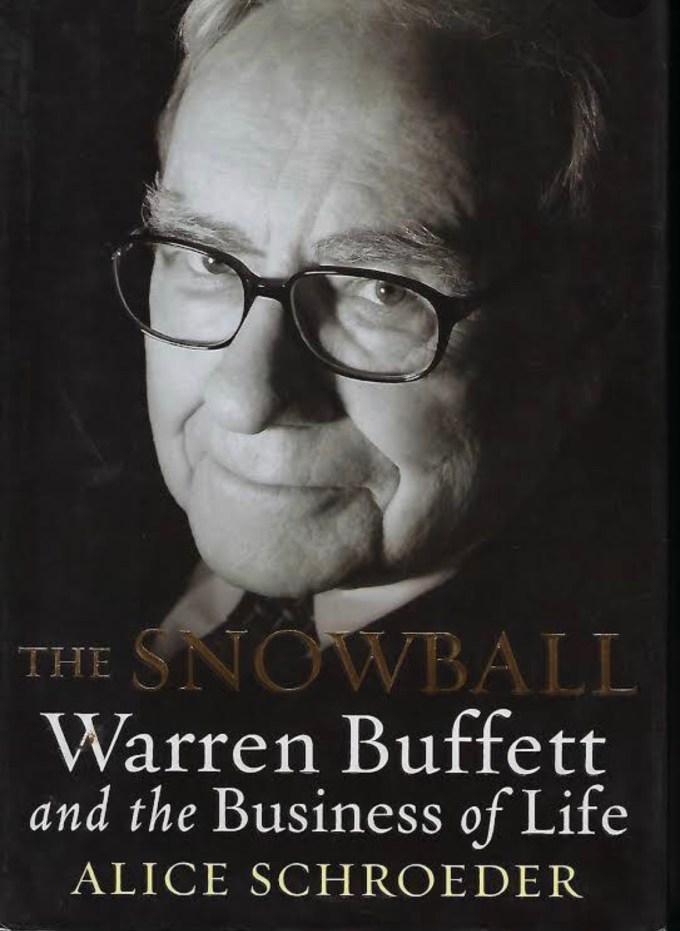
Sometime around 2010 during the bankruptcy process for Borders I found The Book. In the parking lot of the mall was all of Borders’ inventory under these huge tents. Rows and rows of books. I came across one book of this old wise looking guy. The look on his face was one that said, I know more than you. The book was The Snowball Warren Buffett and the Business of Life. Embarrassingly, I had never heard of Warren Buffett. And why this book intrigued me to this day I have no idea. It was a massive book with 787 pages of fine print and minimal pictures. The idea of ever reading it seemed daunting. But I had been reading about investing for a few years and the book was cheap so I figured what the hell. I remember reading the summary on the inside and phrases like the “Oracle of Omaha” and the “Sage of Nebraska” jumped out at me. As if he were some type of living legend. And for some reason the description of him as just a plain and simple ordinary billionaire is what sold me. I had to know who this guy was.

And so it began. I devoured that book. And it sparked a passion for business and investing that still fascinates me today.

Buffett’s story is relatable in many ways. You read about other billionaires and most if not all started a hugely successful company. In other words they created something. And while inspiring and interesting to read, it does often leave one feeling inferior. However, Buffett didn’t create anything. He is the ultimate capitalist. I don’t have the time to write out his biography in this post, but I encourage you to read his story or watch some of the biographies that have been done on him.

To summarize, he graduated from high school with roughly ten thousand bucks, invested in companies ran by others and ultimately became the richest person in the world. He takes the long view, understands value and is a brilliant investor. Some of his investments have been in plain sight, yet somehow he saw value where others missed it. Many of his investments he has owned for decades. In other words, he shuns the short term mentality that grips Wall Street. Oh, and he still lives in the same upper middle class house he bought in 1956 for $31,500. Intrigued?

You may be asking, ok but why did this book change my life? When I was younger, I can’t say I had passions, but I was incredibly curious. I would ask random questions like “I wonder how much money this store makes?” Needless to say, although I was curious about many things, I had a particular curiosity about business. I always fantasized about being a business owner and how pleasurable it must be to be in control and work with the numbers, alone at night in your office. The idea of working with “my numbers” intrigued me. Something I can have control of, optimize and compete in. I don’t think I thought of it as a passion at the time. But this book unlocked that passion.

Buffett’s approach is to buy pieces of companies in the stock market. And to approach those pieces as if you were buying the whole company. Berkshire Hathaway, which Buffett is a controlling shareholder, also owns wholly owned companies. And in these wholly owned companies he leaves the management in place. Essentially he writes a check to buy either a piece or the whole company, and says I want to buy the management too, just send me whatever excess capital you don’t need in your business. This is very different than the typical corporate raiders, or day trading masses that populate Wall Street. Buffett’s approach therefore is not of a speculative nature but that of an owner. What this taught me is I don’t have to have big bucks and or creativity to start a company of my own, I can save money and buy little pieces of companies via the Stock Market. And my approach can be the same. I can check in every quarter and see how my company is doing by reading the quarterly reports. In essence I would get to live out that childhood fantasy. Suddenly a whole new world opened up. But I had no idea early on how to read accounting statements or what makes a good business. Why did some companies fail? Or What made an exceptional company? But the passion was born. And to this day this mindset shift has paid dividends, pun intended.

Be Lazy And Get Rich

I love stocks. Anyone that knows me knows this. It’s a true and natural love. Unconditional. The reason for this, 1) I view them as owning a piece of American business. 2) I recognize that they will be the gift that keeps on giving. 3) It is really a lazy asset class, meaning I don’t need to do anything and 4) I don’t need to know anything either. You may be wondering how can that be? You don’t need to do or know anything?! Yes. That’s the magic of the stock market. In fact, I often make the case that this is why they are my favorite asset class. I can let the best CEO’s in the world run them and I can just sit back and enjoy the ride. What you need it discipline to keep buying. And to be educated on want you really own. This education should breed confidence. So I guess I lied a tad. But you can certainly get all the education you will need to be successful from this blog. Anything more is probably unnecessary.

Owning a stock is very much like being a silent partner in a company. The company needed your capital to grow. In exchange for your capital, you are a part owner. If you picked a solid company, earnings should grow over time. And so too will the value of your share or shares. The best part is you get to let someone else run the business. That’s not your job. You are a capitalist after all.

But let’s be real, picking stocks takes skill. You need to understand accounting, read financial statements and have a pretty good sense of the difference between price and value. So how can I get away with saying you don’t need to do anything or know anything? Index funds. All you have to do to be wealthy is buy a Total Market Index Fund, every month. You don’t have to know how to time the market. You don’t need to know which stocks to pick. You don’t need to know when to sell either. And you damn sure don’t need to study accounting. You simply manage your personal cash flow, take the excess each month, and buy stocks. Easy peasy. It’s that simple. Admittedly this does take a level of discipline. Living below your means that is. But hey, nothing worth having is without some element of sacrifice. And would you really cherish the accomplishment later without said sacrifice? Probably not! So buckle down and double down!

We all live hectic lives with our careers, children if you have them and maintaining households. For most people, setting themselves up financially is an after thought. Where do I even begin? It’s all to complicated and risky. And thats why stocks are so amazing. With a simple click of the mouse, or even automatically, you can buy a cross section of American business. Best of all, the best CEO’s in the world will be working hard each and every day to increase the value of your shares. You can have this running in the background. Taking on a life of its own. Making you rich without you even knowing it. In fact, if you never checked it, it would probably be to your advantage!

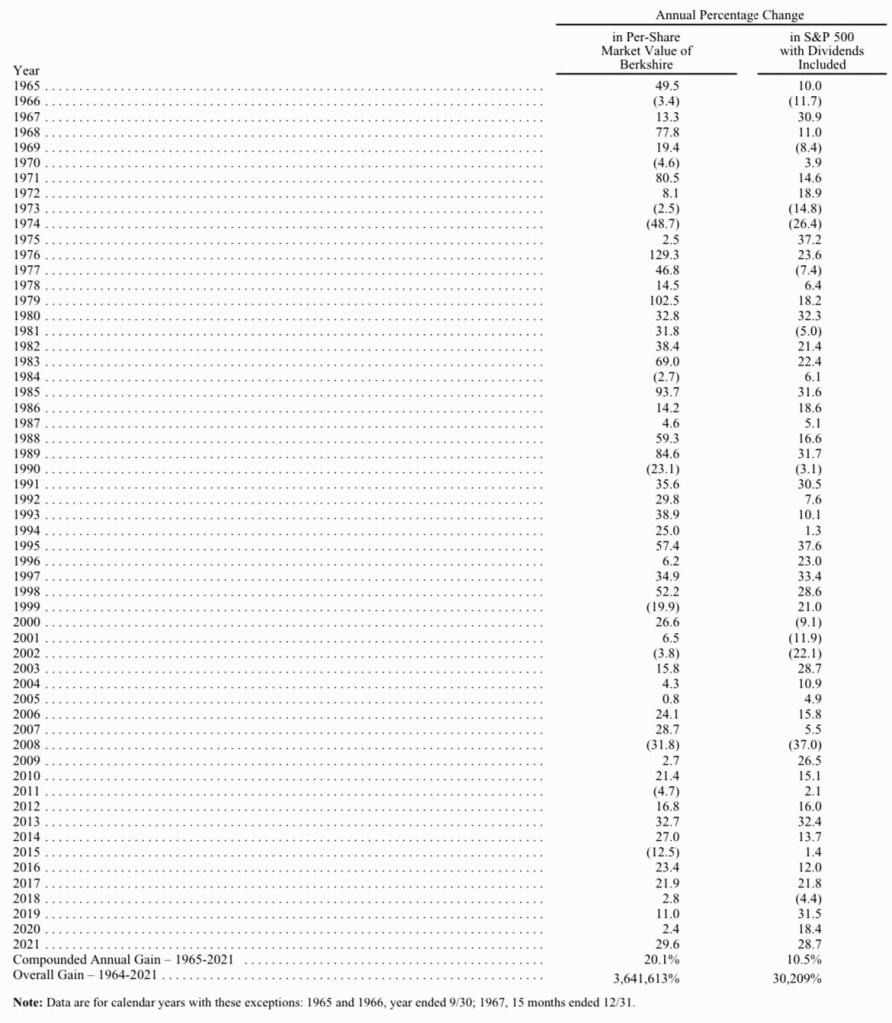
I like to think of someone’s investing career as 40 years. From 20 years old to 60 generally. With that, I’d like to show two different photos. The first one is the returns of the S&P 500 since 1965. The second is the value of your portfolio if you Invested $12,000 a year from age 20 to 60, with a compound interest rate of 10.5%, which is what the market has done since 1965 on average according to the first photo. Sometimes, being lazy is the right move.

Want To Be Financially Well Off? Be Boring

Investing is such a fascinating game. There are so many different schools of thought, different approaches and experts to try to gleam advice from. There is a plethora of gurus everywhere you turn. And they all have one thing in ok common. Everyone tells you that you will make your fortune through ACTIVITY. These activities can range from day trading stocks, flipping real estate, buying and selling options, timing stock markets and many other strategies. They all say you need to be in the game and doing something. These strategies are what I would classify as high risk, high reward. But as I get older, I’m convinced you will make your fortune from INACTIVITY. After all, as I mentioned in a previous post there are two basic rules to investing 1. Never lose money 2. Never forget rule number 1.

Full disclosure, I have not followed this line of reasoning for most of my investing career. But you know what? Sometimes the best lessons are those learned from mistakes. You go through life, try different things, stay diligent and if you learn from your mistakes, you get more polished as time goes on. You become weathered, refined and more efficient. But the key is you have to learn and adapt.

That brings me to the point of this post. My advice to those reading is to be boring. Your investing style maybe shouldn’t be something to brag about at a party? Just my two cents. Boring is probably the ideal approach long term for most people. Be the tortoise. I have read this so many times over the past 15 years, and at 37 I finally understand why this is solid advice.

Over the last three months, I have simplified and streamlined my investments. I have moved out of any stock or fund that requires any kind of thought or decision making. Basically I have adjusted my portfolio to be bullet proof. A no brainer portfolio if you will. And I have to say, it’s been one of the best decisions I could have made. I have become the financial equivalent of a basic bitch.

Being boring is, well boring. I find myself nowadays barely checking my various stock accounts. I go weeks sometimes without checking stock prices, the S&P 500 or even real estate prices. I mean what difference does it make really? With my stocks I am 80% indexed in plain Jane total stock market index funds and S&P 500 index funds. I would simplify even more if I could but some accounts only offer certain funds. With the real estate I own, I hardly check the market value of them. Why would I? I do an analysis once a year and type up a profit and loss statement with a few figures such as return on equity and cash on cash return. And as long as these figures are acceptable, I file it and then go about my life.

This level of boring breeds efficiency. it also strips emotion out of the equation. I know that stocks retain earnings and will reinvest those earnings and increase profits over time. So, I own a Total Stock Market Index fund to remove any decision making and spread out my risk. I don’t need to think, to stress or be influenced by market moves. Which could easily coerce me into making costly mistakes. I don’t need to worry if the mutual fund I picked that has a certain strategy was a smart move or if the stock I picked will turn out ok. I just own every stock. And I just keep buying. Consistently. Whether the markets are up or down, to eliminate the element of trying to time the market. You see, boring is a superpower in many ways. And it all but guarantees you follow the two rules of investing mentioned above.

The epitome of boring is Warren Buffett. 99% of his wealth is in Berkshire Hathaway Stock, to the tune of 380k class A shares. Berkshire is not very well known or understood. But I would argue it is a boring company/investment. Buffet’s main job is allocating the capital that Berkshire retains into more businesses and or marketable securities, with the goal of earning more as the years go by. But, he famously missed the dot.com bubble by avoiding any and all internet stocks. In fact, he was laughed at and mocked in the late 90’s as having lost his touch and for being way to old fashioned for such a new tech centric economy. He famously gave a speech in 1999 in Sun Valley Idaho in front of a who’s who of business and tech icons deriding the tech stocks as being wildly over priced. You see, Buffett has always invested in very boring and very predictable companies. To him stability is gold. And that has been his genius. He sticks with what he knows. A famous quote from Buffett at his shareholder meeting in may of 2001:

“We have embraced the 21st century by entering such cutting edge industries as brick, carpet, insulation and paint. Try to control your excitement.”

Suffice it to say, Buffett is boring. Over the last two and a half years, fanciful IPO’s and SPAC’s have brought a level of excitement and capital to Wall Street not seen in decades. Buffett on the other hand chose to hold, cash. To the tune of 145 billion. While everyone else was focused on activity, Buffett focused on inactivity. He did nothing. How did this work out for him?

Remember, investing is kind of like baseball with no called strikes. You don’t have to swing. You can sit at the plate forever and do nothing. And when you do swing, you don’t need to swing for the fences every time. Singles and doubles will produce a satisfactory batting average over the course of your investable career. Think batting average( compounding rate) not home run count.

The Aloe Vera Of Personal Finance

I often get asked, what is the ONE thing I can recommend to help someone with their finances. After hearing a range of problems over the years, my answer is ALWAYS understanding your cash flow. While it certainly isn’t the only thing you should do, it is definitely the first thing and probably the most important. Cash flow is to personal finance as aloe vera is to basically all ailments, being nature’s most powerful natural healer. As such, all problems with money start and end with cash flow. It’s true if you are talking personal finance or business and investments. Understanding the relationship between cash coming in and cash going out is foundational. This cannot bet skipped or done half ass.

So how do you start tracking your cash flow? Brace yourself… keep every receipt or somehow record what you spend money on! And this is your total spending not just your bills. If you give someone a quarter, record it! Ha! No but seriously. It needs to be dead on balls accurate (My Cousin Vinny reference) for you to have confidence in your monthly figures. I also categorize things I’d like to track. For example, food, gas, miscellaneous, entertainment, travel & gifts. This embraces that old adage of what you keep track of you naturally improve. And by improve I mean get more efficient in your spending. Cutting waste, and determining what is truly important and what isn’t. And how that spending is fitting into your long term financial goals.

When I started out I decided that there was a ton of ridiculous Americanized fancy pancy wasteful spending going on. Things that added no lasting value and or happiness to my life. We get sucked into this idea that we work hard. And spending money on things is a natural byproduct of this and we deserve it like a birth right. I was a bit extreme with this early on. I basically didn’t buy anything I “wanted” for years. I bought things I needed of course, like new running shoes yearly, and other things like that. But never just because I wanted it. As I get older and I’ve accomplished some goals financially, i’ve learned it’s ok to every now and then buy a want. Especially if it has lasting value. I recently bought TWO pair of Oakley sunglasses. One for casual every day wear and boating and one mainly for running and outdoor fitness. But these are things I will use every day for a long time. And I have to say they were well worth the money. I love running in them.

I think the key with “want” spending is to avoid impulsivity. Also to scrutinize your spending to see if it improves your life, has lasting value and adds happiness for long periods of time. Avoid the sugar high spikes off happiness that impulse shopping provides.

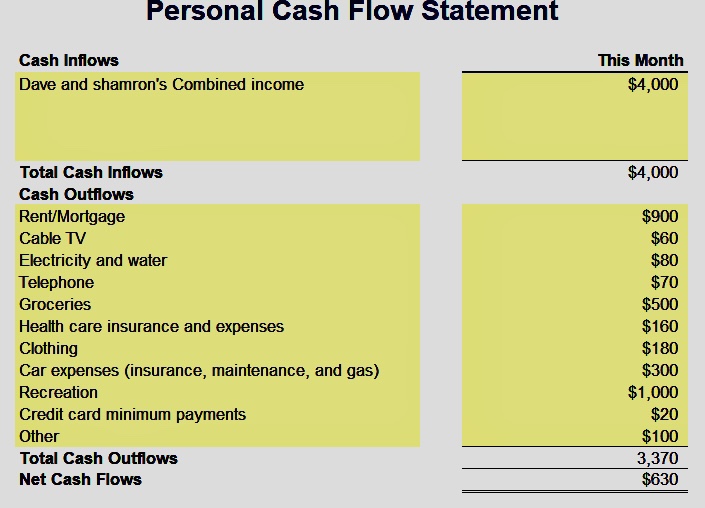
Ok ok ok, this all sounds simple and easy. If it were that easy then why doesn’t everyone do it? This question is one I think about often. And I don’t really know. If I told you all you had to do was rub aloe on your arm every night before bed and you’d be healthy forever, everyone would do it. Tell people to keep a record of every penny earned and spent and they look at you like you have two heads. The following is an example..

Sometimes I think people doubt I actually do that every month. I suppose it is a lot to do at first. That is until you get used to it. I’ve been doing that for over a decade actually. Month after month. My job is to make sure I have more money come in than go out. And I will do whatever I have to, to make sure of that. It’s that simple.

When I tell people this they start blurting out estimates and ranges. “I spend about 650 on food and 300 on gifts” etc. This is it NOT going to work.

You need to have full accountability. Like you were running a business. Imagine. If every month and therefore every year you knew exactly where all your money went. To the penny. Even more important, you knew how much you spent relative to how much you made. How empowered and in control you would be! The secret to getting ahead is to build the gap between the income and the expenses. And then take that gap and set yourself up financially. But there has to be a gap. Month in and month out. The only way to be sure of this is to keep track. Otherwise you will naturally start to say crazy things like we can afford this that and a third. Spending all the way up to your income. And then the gap is gone. You are now treading water financially.

Do your current and future self a solid and build your gap between income and expenses. Do this by keeping track of your expenses like a religion. Your life will take so many positive steps forward and it will be so much easier. You will be in full control of your finances. Done right and you will have thousands in extra cash every month to pay down debt and later invest. You will be stunned how powerful this is over time. How simple your financial life can be.

Let me give you an example from my own personal situation that will demonstrate how powerful knowing your cash flow is. I have three homes. Two single family rental properties and my primary home. I just replaced all three roofs with 5V Metal. Total cost was $49,040. I don’t have that kind of cash sitting around. Strategically. Better to have it invested. But, I have two lines of credit at low rates. A Home Equity Line of Credit & a credit line against my brokerage account. Both are variable rates. But much lower than a credit card because they are collateralized. In fact, they are cheaper than a mortgage currently. Now using this kind of debt may seem daunting. Admittedly I had anxiety at first as well. But then I realized how much data I have to analyze to determine my expected pay off time. And this alleviated my worry.

I averaged out my free cash flow over the past two years. $4,372 a month is what I averaged, after of course maxing out my 401k. So while still contributing the most I can to my retirement, I still had plenty of cash each year to work with. Suddenly this became an 11 month problem. ($49,040/4,372=11). Ahhhhh the power of knowing what you spend. Been sleeping like a baby every since. And! Now my biggest capital expense at each property is complete. Should be smooth sailing from here.

Now imagine if I was barely squeaking by each month, spending right up to what I made with no accountability and no free cash. I’d be very discouraged and this would be a mounting problem.

Unfortunately, If you don’t have full accountability, you will spend most of what you bring in or possibly even more than you bring in. Cash will dwindle down, forcing you to use credit, refinance your house, take from retirement accounts or even borrow from others when expensive things happen. Imagine a life where you have $8,500 a month coming in on average and $2,500 being spent. This is equivalent to financial angel handing you $6,000 solely to put aside to build your financial empire. Your life expenses have been paid from the $2,500.

Only thing is, it HAS to be used to build your financial future. For example, to pay off debts, build college funds for your children, pay off your house or cars etc. and hopefully build assets once the debt is cleared up. If you start to squander it on useless consumer items the angel takes this “future” building money away. The debt comes back slowly and you backtrack. Fortunately, you don’t need an angel, at least not in this context. You just need to understand how much you spend relative to how much you make.