The Ultimate Wealth Score

Let’s face it. We all like to see how we stack up to those around us. It’s natural. It’s all part of the evolution of our species and a great way to learn and grow. There are some great things that can come from this. And also some bad. Depending on how the information is processed and used. If it leads to envy and jealousy it’s probably counter productive. If it leads to adjustments and change for the better, it can be highly productive.

When the topic is personal finance, which are such a taboo subject like religion and politics, most people are left in the dark when it comes to any level of comparative analysis. I view this as a very negative thing. If people knew how far behind the averages they were, it could encourage them to make necessary adjustments to ensure their later years are not destined for poverty and a diminished quality of life. Unfortunately we have no idea where we stand usually. Nor do we even know a valuable metric to use as an instrument for said comparison.

I hear people say things all the time that lack context and or relevance. For example, a statement like “oh he’s rich he or she has 10 million of assets.” This lacks so many needed inputs to assess someone’s wealth. Like, gee um what are the liabilities maybe? Or how much do they spend annually? Quite feasibly you can have 10 million of assets with 9 million of debt, be spending more than you are bringing in annually and be on your way to bankruptcy. Real talk.

It would be so useful if we had sort of a universal wealth metric. So we all know where we stand. This could be so beneficial to those with low score to make the necessary improvements and for those with great score to be able to take their collective foot off the proverbial financial gas pedal and learn to enjoy what they have accumulated. So the score can benefit everyone. It’s all about context and perspective. Two eye opening and powerful words.

So, I have formulated a metric that I use personally called my wealth score. I use it to compare myself to others of course. But mostly I use it to ensure I don’t fool myself into thinking I’m doing better than I actually am. After all if you can’t be honest with yourself then well, you’re probably screwed. People fool themselves all the time. Without knowing or realizing it they tell themselves financial lies. They transfer money to a savings account month yet run cash flow deficits bc they don’t keep track of their total spending or they contribute to a 401k but spend more then they bring in, so their savings rate is actually negative. They are growing their assets but growing their debt even faster. These are all examples of the lies we tell ourselves when it comes to money. It should come as no surprise that people feel they are treading water financially. We need to keep score.

What we need is the best tool to see where we are. One that takes into account all the relevant metrics. Assets, liabilities and cash flow. But also a metric that strips out the unnecessary fluff metrics such as your primary residence and frequent flyer miles for example. We have to get to the brass tax of what you need to know. Without further ado, here it is:

net investable assets/total spending

If this number is above 25, I’d say you are entering the financially well off level of personal finance. So what does all this mean? As I usually do, I will use my own financials to illustrate the usefulness of this score a little later. I like to look at what could be used to invest to create passive income. Obviously, my primary house would do nothing, my frequent flyer miles or American Express points would do nothing either. Vehicles would also be excluded. Although if you had one or more “secondary” vehicles that could be sold and invested, this should be potentially counted. These are all great assets, and I count them on a balance sheet as such. But if I want to create passive income, they are useless. Hopefully the difference is clear. It’s an important distinction.

For me, for the net invested assets portion of this formula I count only the equity for investment real estate, net stocks which factor in lines of credit against them, and cash. All these assets are net invested capital. So for example if I had 350k of stocks and a line of credit borrowed against them of 50k, I’d factor 300k.

Next is the spending. This is the tricky part of this formula. As I’ve mentioned in prior posts, knowing your spending is incredibly useful, yet almost nobody does it. It’s tedious to keep track of. Years ago you’d have to have spreadsheets and keep receipts. These days it’s easier. You can simply link your accounts to software and it tracks it for you. I do both. I’m extra. If one fails I have backups. The important thing is to capture all your spending. Every penny. Not just your bills. How much does your life cost essentially. Notice that I don’t factor in any personal loans or credit card balances into this formula. These would be captured in a balance sheet of course. For the purpose of this wealth score however, it would be captured in your expenses in the sense of what you pay for your required statement bill. But only what’s required. Not any extra you choose to put towards servicing the debt.

This score is in my opinion the best at capturing your situation as it is. Only what’s necessary. Stripping out the rest. My score is 49

1,484,583 / 30,114.13=49.299

Not bad. my goal is to improve this figure going forward. Which means I have to essentially grow net assets much faster than I’m growing my spending or lifestyle. And that my friends is as they say, the brass tax of it. What is your wealth score? Happy holidays and happy calculating.

Free Money Is Everywhere

Many financial pundits will tell you to avoid credit cards. And for good reason. You can get yourself in a hole real quick. And with 25%+ interest rates in some instances if you carry a balance, it can be suffocating to say the least. And if you are the type to use credit cards to fund things you can’t afford, they can be financial suicide!

However, for those of us on a solid financial footing who keep close track of money in\money out a.k.a cash flows, credit cards are legitimately free money. BUT, there are rules. Well, really only two rules. Know your cash flow like it’s your child, and never carry a balance.

There are of course some secondary rules pertaining to how opening cards can affect your credit and how to mitigate this, or how many welcome offers you can accept in a time period etc etc. I’ll admit I’m no expert with these secondary rules. I just try my best and google if needed. Or speak to friends who are better skilled in regard to these secondary rules.

One thing I will mention. When selecting cards, try to make sure that the statement credits it offers are for things you use regularly so it’s an actual benefit to you. For example, if you don’t drink coffee but then get a card offering a statement credit for coffee, this is kind of a waste. Now you will be simply spending on something you don’t normally buy to get a credit. Not ideal. On the flip side if you are a coffee addict like me and buy coffee regularly anyway, this is value added in my opinion.

With all these necessary cautionary tales and warnings behind us, let’s get into some actual numbers from November 2024. I will also share two stories of some wicked welcome offers I utilized this year.

My credit card game is pretty complex. Different cards are used for different things. All with the goal to maximize offers, points/cash back and statement credits. Let’s distinguish for a second the differences between offers, statement credits and rewards.

  • Offers: change periodically based on your spending habits and have to be added to card first. Usually there is some fine print you have to read to ensure you qualify.
  • Statement Credits: typically you enroll in these offers once and whenever you use the card you have enrolled you get credited back.
  • Rewards: these are either cash back or points usually. Point valued can vary depending on how you use them.

For the month of November I received a total of $123.47 of free money for using my American Express cards. I say cards with an s because I’m using multiple to maximize the rewards. This 123.47 in cash back offset expenses that would have happened regardless. I received cash back on a Broadway show, a hotel in NY, Dunkin’ coffee, Five guys, Grub-hub, Walmart Plus membership, Amex food credit and Home Chef. Just by using a little effort.

Keep in mind these are just the offers and statement credits. This $123.47 does not include the normal rewards for using the cards. This can range anywhere from $50-$125 a month. In fact, on average through November 2024 I’ve used $163 of offers and statement credits per month. That’s real money that has a real impact on my bottom line. As far as my rewards, I have accumulated roughly $5,045 in value for the year. (Some of this was welcome offers that I will get into later.)

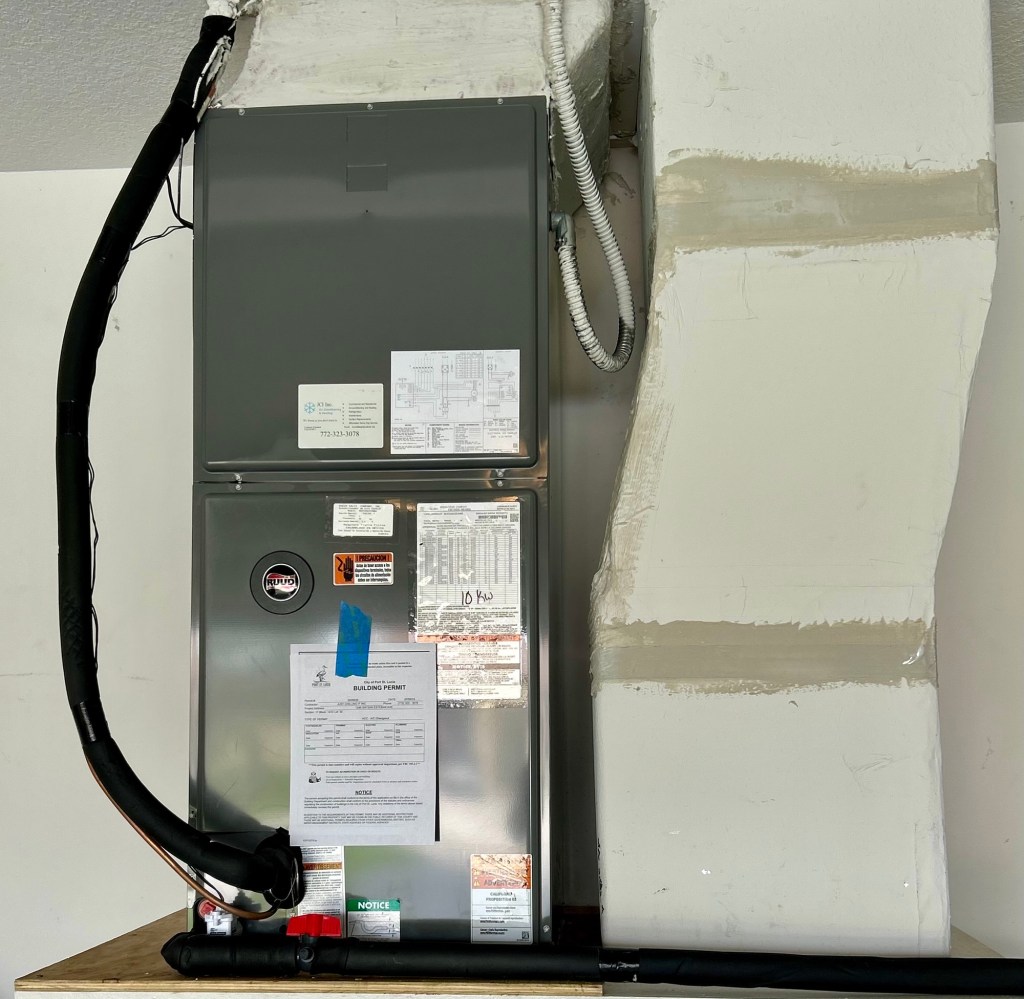
Now for the holy grail of welcome offers. I had to make two rather large purchases this year. A new HVAC unit for my personal residence and a new PVC fence for a rental property. I searched around and researched the products, read reviews and carefully studied what I was buying. For the HVAC, because I was doing a size adjustment from what I had (going down half a tonnage) I was reading HVAC Reddit forums searching for information.

I said all that to highlight this: I put equally as much effort into financing the two purchases. Because that’s equally as important.

Looking online I found a Business Credit card through chase that had 0% for 12 months. Also, a welcome offer: spend $6,000 in 3 months and get the equivalent of $750 back in a statement credit. Well, since the cost of the AC was $6,284, this was a no brainer. As soon as I received the card I immediately requested a credit limit increase. It was granted. Then I ended up putting more than 6k on the card so my total credit back ended up at $840. So my new HVAC was $5,444.

Lastly, I had an email from American Express for a card where if you spend 15k in 3 months you would get 175k American Express member points. Plus 0% for 21 months! The fence I mentioned earlier was just over 9k. BUT, I also needed to pay for my property taxes and home insurance. So this opened an opportunity. Combined, this would get me pretty close to the 15k of required spend to get the massive welcome offer.! Considering the value of those Amex points of roughly 2 cents per point when transferred to travel partners, the net cost of my fence project will be $5,250. Pretty epic!

And now for the cherry on top. All the cash I need to pay all this recent credit card spend is currently sitting in a HYSA earning a recently decreased-to 4.45%. So, I set reminders on my phone of the dates where the 0% ends and I will transfer the balances in full upon the requisite due dates. 😎

Fall In Love With The Process

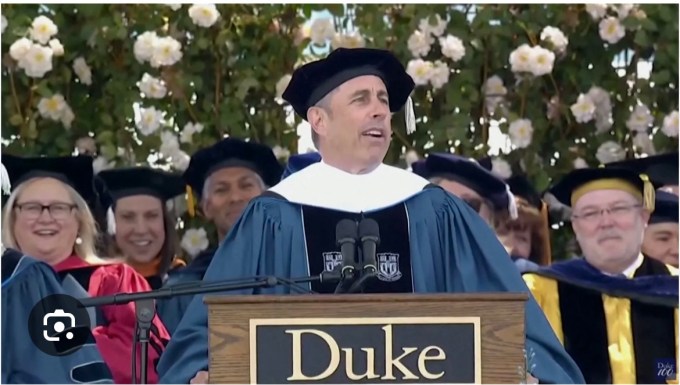
I recently watched Jerry Seinfeld give the commencement speech at Duke University. Amidst the humor and lightheartedness he said something I thought was brilliant. I immediately wrote it down. I always enjoy things like that. Things that cause you to pause and reflect immediately. He said:

“don’t think about having, think about becoming.”

I loved it immediately. And for so many reasons. I truly believe you must become obsessed with perfecting and enjoying the process. The results should work themselves out at some point. I like to think I embody this approach. Sure, I often fantasize about the results and what they will look like down the road. And that’s always fun. But I always try to just slow down and focus on perfecting the process. And frankly I’ve begun to enjoy it.

I know with every 1% improvement I’m becoming better. It’s a slow process no doubt. Like polishing a huge rock down to small tiny beautiful sculpture. But if you forget about what the little finished product will look like and just enjoy the polishing process, you begin to view every setback, disappointment or mistake as just another opportunity for growth and improvement.

To achieve growth, I think you have to be brutal in assessing your own past. I’ve heard from people my whole life that I’m my own worst critic. And that’s definitely true. And as mentally exhausting as that can be, it’s also the part that drives me, and brings me some joy. And I think deep down it’s because I know I’m becoming that version of myself I always wanted to be.

However, when I look around I see people obsessed with having. With social media comes the ability to constantly compare what we have to others. Keyword here is “have.” Nobody posts on social media the boring “becoming” part. The hard work, the mistakes or the persistence that’s required for most levels of success. That’s not sexy at all. Our society doesn’t care about that part. This shallow emphasis on “having” can create an entitlement and laziness that becomes embedded in our psyche. And this shapes behavior in a hugely negative way.

When I read biographies, I’m most interested in the becoming part. I like the “in the trenches” aspect of stories. The building. I think in some ways we all do. When you watch the famous movie Rudy, you wouldn’t have enjoyed the ending as much had you not watched the becoming part.

So slow down a bit. Allow fantasies to swell in your mind about what you’d love to have or who you’d love to be. It’s healthy and normal. But put your real energy into the becoming part. Personally I think you’ll have a lot more fun, and enjoy the journey more. And the result will be much more satisfying later.

Automated Advertisements

I don’t know about you, but with most things in my life I am constantly scrutinizing every detail in an attempt to optimize and get more efficient.

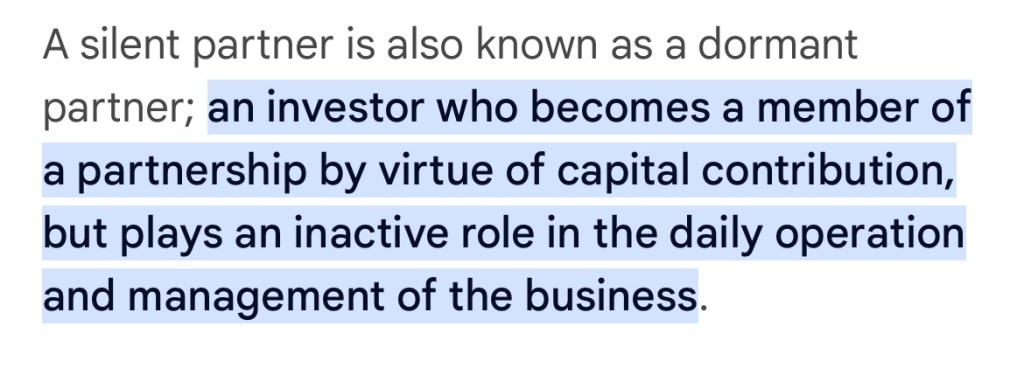
As part of this ever evolving process, I have slowly and over time completely automated my finances. This transition happened over many years. A few automated bills here, a few there, to the point where I’ve almost become like a silent partner to my own finances. For those of you who don’t know what a silent partner means:

As humans we all enjoy reassurances that whatever we are doing is ok. For me, these reassurances keep me grounded to my true North. They remind me of the reasons for what I’m choosing to do. I call these ongoing reassurances my automated advertisements. But first let me explain what advertising is meant to do.

If you’ve ever seen the hit show Madmen, the main character Donald Draper is pitching an advertising campaign to the owners of a cigarette company called Lucky Strike. The show is based in the 60’s during a time when government regulation due to the dangers of cigarettes were having an adverse affect on cigarette companies. Draper, which all his brilliance was getting to the essence of what advertising is when he said:

Advertising is based on one thing, happiness. And you know what happiness is? It’s the smell of a new car. It’s a billboard on the side of the road that screams reassurance that whatever you are doing is ok. You, are ok.

With that in mind, I like to create my own automated advertisements. I do this by turning on every possible notification from the 25+ financial accounts I have. These act as little automated advertisements meant to reassure me that what I’m doing is working. It reinforces that the process works.

  • Rent checks received
  • Dividends received and reinvested
  • Net worth increased
  • Cash flow for the month was $…..
  • Bill paid in full

Some of my favorites are when Amex sends me push notifications stating my credit card statement was paid in full, as I sit at lunch overlooking the intercostal like I did yesterday with clear blue skies. There is zero room for error because it’s all done automatically. The system works if I do nothing at all.

These reassurances although small, are the reward for discipline, responsibility and being organized financially. The mundane month to month details are handled. All I do is much like a silent partner to a business would do. I check in and see how things are going. Because of this, I know that there was more cash coming in than going out, to the penny. (And by the way, I’ve just recently automated this process as well.) So therefore, there is adequate money to pay credit card statements in full and all my other bills. I don’t need to worry. This is an upper level of financial security. Being hands off. And it’s wonderful.

My money is like a well oiled machine. My job is to make sure I’m headed “basically North.” Along the way I can see my automated advertisement billboards screaming at me that what I’m doing is ok. That I’m, ok.

The Grand 2023 Experiment

Unbeknownst to anyone, a shift occurred in the life of Beau Pearson for the year 2023. Dare I say it, I slowed down. I slowed wayyyy down! I burned the candle from both ends so to speak, making less money and spending more. Just saying that out loud as I write this makes me cringe. And yet..this was on purpose and just because.

Why you ask? Why purposefully spend more and make less? Well, I wanted to see what that would look like financially at the end of the year and how I would feel about it is the short answer. Would I wish I didn’t do it? Or crave more of this new found easier path? Perhaps I would want to tighten up and grind extra hard to make up for the lost productivity. So many things to consider. But I did feel it was time to pivot. After 12 years of grinding due north to strict GPS coordinates, it was time to put the boat on cruise control and simply check in from time to time to make sure I was still heading what I will call “basically North.” I wouldn’t call it burn out, but at some point there has to be a course correction. So what did I do differently and how did the chips fall at year end?

For one thing I bought a “just because” car. I didn’t need a new car. I just wanted the feel of a new one and the experience of driving around in style. Especially when I want to go for a nice night out or cruise around for pleasure. I kept my old one to use as a daily driver. Which has been working out great. Averaging well over 40 mpg in the city, it’s a perfect commuter car. Plus I’ve had it since 33k miles and I take really good care of it. So now I have two cars. I don’t like the added insurance but it’s not that much more. Anyway, cost of this new car was $35,154.62 out the door. In May of 2023

Then, around the middle of December 2022 some long term tenants I had notified me they wanted to break their lease early. They were extending their family and needed some more space. Due to this, I was going to have a dreaded vacancy smack dab in the middle of my 12 day vacation I had planned in February! Now, the old me would have surely used that time to save money by fixing and painting things myself.

The new me however, said the heck with it. I made a detailed list of 27 items with photos, called my handyman/contractor and did a walk through with him explaining what needed to be done.

Finished and ready to list

As for me, I came into work one morning shortly after and decided to take a cruise during this vacancy instead. I called Norwegian and said “I want your biggest and or newest ship for a week.” You have to understand, this would have been unthinkable not that long ago. Not only was I going to have an expensive contractor bill when I returned, I was going to spend a pretty penny for this cruise. But I was in pivot mode so, let’s go!!

Spent a week aboard the Norwegian Encore

Finally, the last change I made was just indulging and spending more freely. I didn’t just throw money away. But if I wanted something I didn’t hesitate let’s just say that. While this may be normal to my readers, certainly not normal to me. Up until this point there would have been a rigorous debate in my head if I truly needed it or if could I do without it. Or put another way, was the purchase a want or a need? Those questions still happened but I relaxed my justifications and happily purchased some things that without a doubt made my time on this earth more enjoyable, more efficient and/or just plain better. I also took the liberty of updating my wardrobe and shoes.

Taking stock of 2023, how did I do? Here is a summary of what I refer to as retained earnings for 2023:

  • Free Cash Flow $33,437.10
  • 401k $24,500.00
  • Net Rentals $8,673.53
  • Total $66,610.63

So it was a pretty damn solid year. I ended up spending $7,432 more than the average over the previous 5 years. Some of this was due to inflation, but some my own doing for sure. Certainly the cruise and added auto insurance for a second vehicle played a big roll. Nonetheless, my total retained earnings for 2023 were $66,610.63. I took $6,500 of the $33,437.10 in free cash and transferred it to a Roth IRA. The remainder went to paying off the car note of which $23,418.29 was paid down. Also, I decided to build up my cash on hand. As a result, I decided to open an American Express High Yield Savings to store this excess cash, so whatever I didn’t put towards the car note I moved to the HYSA, which has an APY of 4.3%. It’s not the best interest out there but well above average. I have multiple Amex cards so it was just easy.

All the work I’ve done over the last 12 years really paid off last year. Stocks and real estate both had impressive years. My net worth climbed $263k on the back of both my stock portfolio and the equity increase in my investment real estate. My stock portfolio climbed a whopping 173k for the year. I did contribute 31k of new money to the stock portfolios between the 401k and Roth IRA. Also I had $15,142.63 of dividends reinvested. So all in all, $46,142.63 was invested in stocks taking into account new money and dividend reinvestment.

So what’s my take on the new Beau? I would say this experience was worth it. I’ll keep being a bit more loosey goosey with my monies and continue heading “basically North,” being sure to at the very least keep it between the navigational beakers.